AMERICA'S 250TH BIRTHDAY
ORCHESTRAL CELEBRATION
Special support from the
Arthur F. & Alice E. Adams
Charitable Foundation
Sponsored by the MSO Circle of Friends
2026 Eddy Award Presentation to Joyce Cobb
Robert Moody, conductor
Jeffrey Biegel, piano
Memphis Symphony Chorus ·
Joseph Powell, conductor
Saturday, May 2, 2026 · 7:30 PM ·
Cannon Center for the Performing Arts
Sunday, May 3, 2026 · 2:30 PM ·
Scheidt Family Performing Arts Center
Program
Variations on “America”
CHARLES IVES
William Schuman; Orchestrated
(1874 - 1954)
Rhapsody In Red, White & Blue
PETER BOYER
(1970)
Jeffrey Biegel, piano
INTERMISSION
The Star Spangled Banner
JOHN STAFFORD SMITH
(1750 - 1836)
Song of Democracy
HOWARD HANSON
(1896 - 1981)
Lift Every Voice and Sing
ARR. ROLAND CARTER
(1942)
Overture to Candide
Candide - Orchestral Suite
You Were Dead, You Know
Paris Waltz
Bon Voyage
Drowning Music
The King's Barcarolle
Ballad of Eldorado
I Am Easily Assimilated
The Best of All Possible Worlds
Make Our Garden Grow
LEONARD BERNSTEIN
(1918 - 1990)
-
Charles Ives (1874-1954): Variations on America
First Performance: New York City, 1964: New York Philharmonic, Leonard Bernstein, conductor
Variations on America is one of Charles Ives’ earliest compositions, written in 1891, when he was but 17 years of age, and originally scored for organ. This orchestration, by American composer William Schuman, features a full woodwind section (plus piccolo), full brass, timpani, percussion, and strings. It is an arrangement of the national anthem of Great Britain—though it turns out that this traditional tune seems to crop up everywhere: It has been used in the former national anthems of Russia, Switzerland, and Germany, and is still in use in the national anthem of Liechtenstein, and the royal anthem of Norway. It was actually the unofficial national anthem of the United States until “The Star Spangled Banner” was so designated in 1931. Ives gave the premiere performance of the work in 1892 at his Methodist church in Brewster, New York, revising it in 1894. It went unpublished until 1949, when it was rediscovered by the great 20th century organist E. Power Biggs, who also recorded the work. Structurally, this work features an introduction prefacing the theme, five variations, two interludes, and a coda.
Peter Boyer (b. 1970): Rhapsody in Red, White, & BlueFirst Performance: Salt Lake City, Utah, June 2023: Utah Symphony Orchestra, Jeffrey Biegel, soloist
Jeffrey Biegel, the featured soloist on this concert set, commissioned Peter Boyer to write the Rhapsody in Red, White, & Blue to commemorate the centennial of the premiere performance of George Gershwin’s Rhapsody in Blue, which took place in 1924. The scoring is substantial, featuring triple woodwinds (including all expected auxiliary instruments), full brass, timpani, a quite large percussion section, and strings. Similar to Gershwin’s Rhapsody, it is a single movement work containing multiple sections, balancing lyricism with jazz influences. The piece has been performed by many orchestras as we approach America’s 250th birthday, and it is a goal to feature the work in all 50 states by 2027.
John Stafford Smith (1750-1836): The Star Spangled BannerOfficially designated as United States National Anthem: 3 March 1931
I can’t help but smile at knowing our National Anthem has its origins in England as the official song of the Anacreontic Society, an 18th century gentlemen’s club of amateur musicians!! It is, for all intents and purposes, a drinking song (though described as “…convivial, to be performed in a special and stately way…”) entitled “To Anacreon in Heaven.” It pays homage to the ancient Greek poet Anacreon, who was noted for his erotic writings, as well as songs devoted to drinking and carousing. Here’s Verse One, to give you some idea:
To Anacreon, in Heav'n, where he sat in full glee
A few sons of harmony sent a petition
That he their inspirer and patron would be;
When this answer arrived from the jolly old Grecian -
Voice, fiddle and flute, no longer be mute
I'll lend ye my name, and inspire you to boot
And, besides, I'll instruct you, like me, to entwine
The myrtle of Venus with Bacchus's vine
The words that we on this side of The Pond are far more familiar with were penned in September of 1814 by Francis Scott Key (“Defense of Fort McHenry”) whilst aboard a British warship that was bombarding the aforementioned fort during the War of 1812. The combination of Key’s lyrics with Smith’s tune became highly popular as a patriotic song, officially becoming America’s National Anthem a little over 100 years later. This version is scored for woodwinds in pairs, full brass, timpani, percussion, and strings.
Howard Hanson (1896-1981): Song of Democracy
First Performance: Washington D.C., 1957: National Symphony Orchestra, Howard Hanson, conductor
Howard Hanson’s Song of Democracy, based on a poem by Walt Whitman, was written to commemorate the 100th anniversary of the National Education Association and the 50th anniversary of the Music Educator's National Conference. Notable performances of the work include an unofficial presentation in 1957 for President Dwight D. Eisenhower, featuring Howard University’s African-American Chorus, and again in 1969, in celebration of the inauguration of incoming president Richard M. Nixon. Promoting a vision for tolerance, inclusivity, and human rights, the work is scored for mixed chorus, full woodwinds (including piccolo and English horn), full brass, timpani, percussion, harp, celesta, and strings.
Arr. James Richens (1936-2026): Lift Every Voice and Sing
Lift Every Voice and Sing originated as a hymn in the late 19th century. The lyrics are by James Weldon Johnson (1871-1938); his brother, J. Rosamond Johnson (1873-1954), set the text to music. Promoting faithfulness, freedom, and thanksgiving, the poem was initially intended as a commemoration of Abraham Lincoln’s birthday, and was first recited by students in Jacksonville, Florida. As a hymn, it continued to be sung at various schools and taught to others, gaining a wide following, especially in the South, as a result. The National Association for the Advancement of Colored People began promoting it as the Black national anthem around 1917, officially dubbing it as such two years later. The arrangement by James Richens being featured in this concert set consists of mixed chorus, full woodwind and brass sections, timpani, percussion, harp, and strings.
Leonard Bernstein (1918-1990): Overture and Orchestral Suite from Candide
First Performance (Overture): New York City, 1957: New York Philharmonic, Leonard Bernstein, conductor
The Overture to Candide by Leonard Bernstein has remained an enduringly popular work since its initial concert performance. Numerous orchestrations for this work exist; the one being featured in this concert set includes full woodwinds with most of the expected auxiliary instruments, full brass, timpani, percussion, harp, and strings. The show tunes referenced in the Overture include The Best of All Possible Worlds, Battle Music, Oh, Happy We, and Glitter and be Gay. Bernstein also included melodies written specifically for the Overture itself. At a memorial concert in 1990, the New York Philharmonic performed the Overture without a conductor as a tribute to the recently deceased Bernstein; it is a performance tradition that is still maintained by the orchestra unto the present day.
The Orchestral Suite is a series of selections put together from the operetta by Bernstein's former personal assistant (for four years during the 1980s), Charles Harmon. The delightful cross-section of tunes include the following: You Were Dead, You Know; Paris Waltz, Bon Voyage, Drowning Music, The Kings' Barcarolle, Ballad of El Dorado, I Am Easily Assimilated, Entr'Acte, The Best of All Possible Worlds, and Make Our Garden Grow. Harmon made some minor adjustments to the original orchestration, but by and large, the work stands as originally conceived by Bernstein.
Printable version of Program Notes can be found here.
On Stage
-
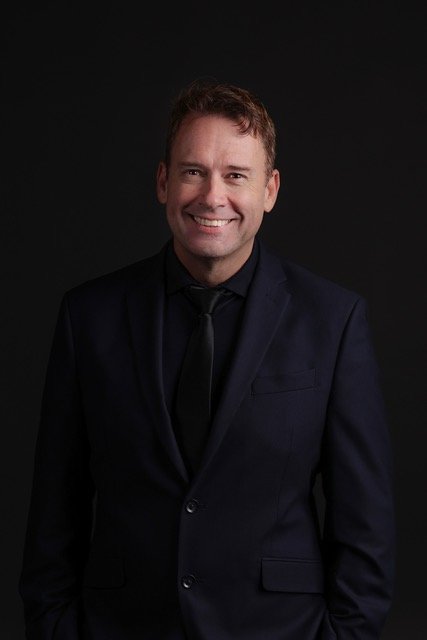
Internationally acclaimed conductor Robert Moody is now celebrating his 10th season as Music Director of The Memphis Symphony Orchestra (Tennessee), 20th season as Music Director of Arizona Musicfest, and his 2nd season as Music Director of the Baltimore Chamber Orchestra.
Under his artistic leadership, AZ Musicfest has become the premiere Winter Music Festival Orchestra in North America, boasting a roster of players from the world’s greatest orchestras. The Memphis Symphony has enjoyed exponential growth in programming, recording, and new commissions. Baltimore Chamber Orchestra boasts top players from the top orchestras in the Baltimore/Washington area and presents innovative and “out of the box” live orchestral programming at world class levels in the Mid-Atlantic.
Prior positions have included music director for both the Portland Symphony (Maine) and the Winston-Salem Symphony (North Carolina), and Principal Conductor for Lakeland Opera (Florida). Earlier in his career, he held conducting positions with the Phoenix Symphony, Evansville Philharmonic, Santa Fe Opera, Brevard Music Center, Interschool Orchestras of New York City, and apprenticed at Landestheater Opera in Linz, Austria.
Guest conducting this season includes debuts with Cincinnati Symphony, Hong Kong Philharmonic, Madison Symphony Orchestra, Philadelphia Orchestra, San Francisco Symphony, Tallahassee Symphony, and Winnipeg Symphony. He also will return to Lakeland Symphony, and lead concerts with the Royal Conservatory Orchestra in Toronto, Canada, and the IberAcademy Orchestra in Medellin, Colombia.
Maestro Moody has conducted many of the world's major orchestras and opera companies, including Chicago Symphony, Los Angeles Philharmonic, Toronto Symphony, Dallas and Houston Symphonies, Kansas-City Symphony, Minnesota Orchestra, Washington National Opera, Aachen and Baden Baden Symphony Orchestras in Germany, Wushi and Shenzhen Orchestras (China),Orquesta Filarmonica de Bogotá (Colombia), the Vienna Chamber Orchestra (Austria), Tampere Philharmonic (Finland) and Banatul Orchestra (Romania). He is also a frequent guest conductor in South Africa, returning often for concerts with the three major orchestras there – the Cape Town, Johannesburg, and KZN (Durban) Philharmonics.
A frequent collaborator with opera superstar Renée Fleming, he will conduct her on multiple occasions in the upcoming season in China, Canada, and the United States. In 2024 he performed the full orchestra world premiere of Voices of Nature: The Anthropocene, a song cycle created by Ms. Fleming in collaboration with National Geographic.
Moody’s work can be found on several commercial recordings, including the Canadian Brass albums Bach and Legends, R. Carlos Nokai’s Fourth World, and with Memphis Symphony Orchestra and trumpet legend Ryan Anthony on Re:Mission Rubato.
Robert is also a close friend and collaborator with Grammy winning composer Mason Bates. Their friendship spans over 30 years, and Moody was the first conductor to commission a full orchestral work from Bates. Robert also commissioned several major works of Mason’s, including Rusty Air in Carolina, and the much lauded Desert Transport. Last season he conducted the world premiere of Bate’s triple concerto Silicon Hymnal with the Grammy winning ensemble Time For Three.
A South Carolina native, Moody holds degrees from Furman University and the Eastman School of Music, where he earned his conducting degree with Donald Neuen. Additional studies included an undergraduate study abroad in Vienna, Austria, and a summer of study with Otto Werner Mueller at Le Domaine Forget in Quebec. He is a Rotarian, and has served on the boards of AIDs Care Services, Winston-Salem YMCA, WDAV Classical Radio, and the Charlotte Master Chorale.
Moody celebrates the life and work of organist/conductor Jimmy Jones, his spouse of 18 years who passed away unexpectedly early in 2024. He now dedicates all his musical endeavors to Jimmy.
Moody lives in Memphis with their two dogs; he is an avid runner, swimmer, history buff, “Jeopardy!” addict, and snow-skier.
-
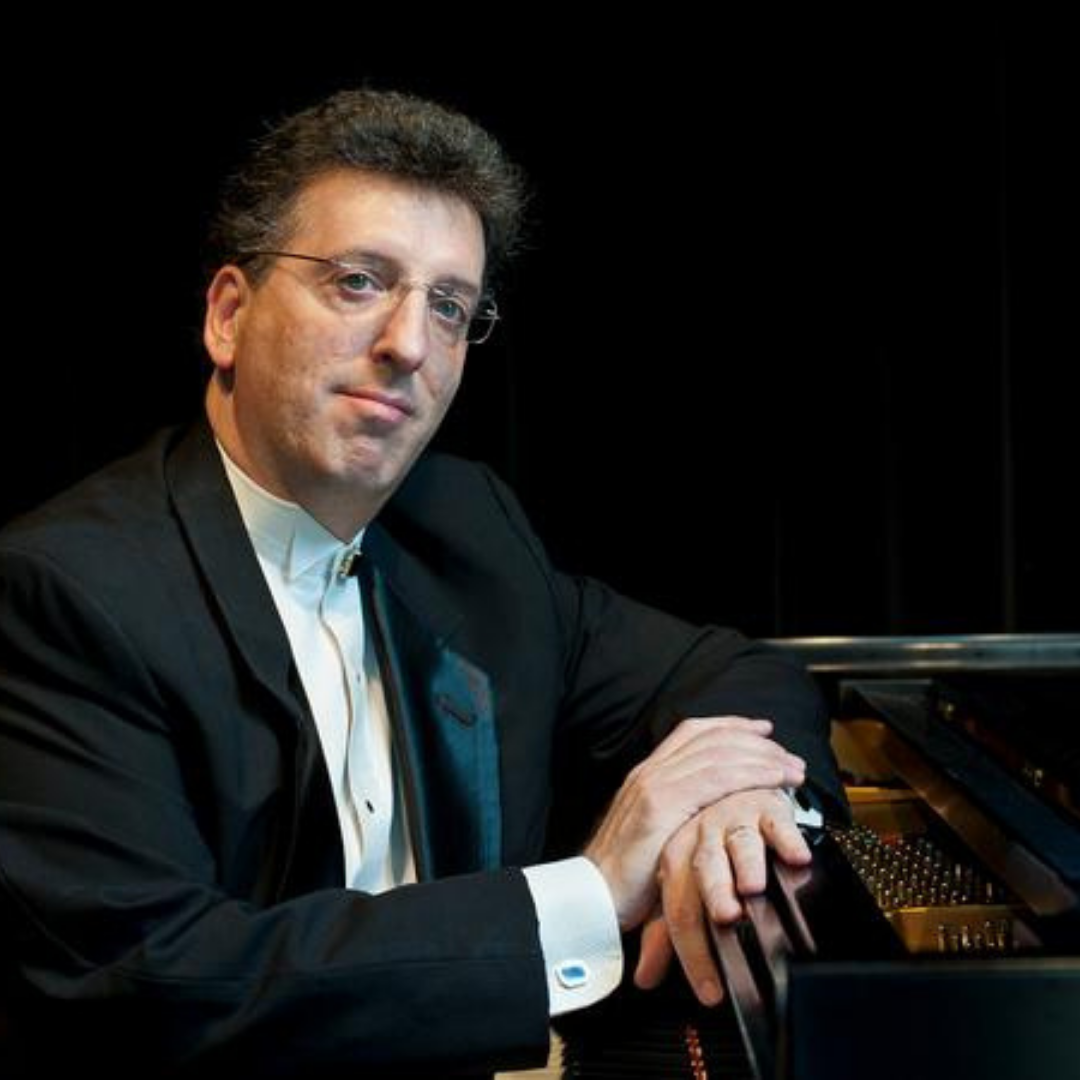
In an age when many artists' fortunes begin with a meteoric ascent and quickly cool with the inexorable free-fall, pianist Jeffrey Biegel has managed to buck that trend, fashioning a career of steady success studded with concerts at major venues with major orchestras, a Grammy winning recording, and more than 30 commissioned works by living composers. His life takes its roots from age three, barely able to hear nor speak, until corrected by surgery. The 'reverse Beethoven' phenomenon explains his lifelong commitment to music, having heard only vibrations in his formative years. 2025 brings the World Premiere of three new works for piano and orchestra: Adolphus Hailstork's "Concerto no. 3" with the Pacific Symphony Orchestra, Melissa Manchester's "AWAKE!" for Piano and Orchestra with the Endless Mountain Music Festival, and, James Lee III's "Concerto in A" with the Louisiana Philharmonic Orchestra. The 2024 recording of Jake Runestad's "Dreams of the Fallen" with True Concord Voices and Orchestra garnered a Best Choral Performance Grammy nomination, on the Reference Recordings label. June 2023-August 2027 features the Rhapsody National Initiative - the first 50-state project for a new work for soloist and orchestra, also the first 50-state project for a new work without composer fees required from orchestras. Peter Boyer's "Rhapsody in Red, White & Blue" has embraced the nation and boasts a recording with the London Symphony Orchestra on the Naxos label. In 2022, he premiered Jim Stephenson's 'Piano Concerto', Daniel Perttu's 'A Planets Odyssey' for piano and orchestra, Farhad Poupel's "The Legend of Bijan and Manijeh" for piano, orchestra and chorus, his own concerto, 'Three Reflections: Freedom (JFK), Justice (RBG) Equality (MLK)', and Christopher Marshall's 'Thanksgiving Variations on "We Gather Together"'. 2021 saw the world premieres of his "Reflection of Justice: An Ode to Ruth Bader Ginsburg" with the Dallas Symphony Orchestra, and Ellen Taaffe Zwilich's "Remembering Ruth Bader Ginsburg" for mezzo-soprano, piano and orchestra in tribute to the late Supreme Court Justice Ruth Bader Ginsburg, with mezzo-soprano Denyce Graves. Also, the world premiere of Ellen Taaffe Zwilich's "Shadows" newly arranged for piano and seven players with the Idaho State Civic Symphony. The pandemic year 2020 focused on composing original "Waltzes of Hope", "Sonatina", and "Three Reflections: JFK, RBG and MLK" for solo piano, and for piano and orchestra, orchestrations by Harrison Sheckler. It was also a time for Mr. Biegel to raise the monetary funds to commission Mr. Boyer's new "Rhapsody".
Moravian College in Bethlehem, PA, conferred the Honorary Degree of Doctor of Humane Letters upon Mr. Biegel in 2015, for his achievements in performance, recordings, chamber music, champion of new music, composer, arranger and educator. In 2019, Kenneth Fuchs's "Piano Concerto: 'Spiritualist'" with the London Symphony Orchestra led by JoAnn Falletta received a Grammy Award for Best Classical Compendium, featuring Mr. Biegel as its soloist. In 2019, the first digital recordings were released on Mr. Biegel's Naturally Sharp label: "Cyberecital: An Historic Recording", "A Pianist's Journey", and the September 2021 release of George Gershwin's "Rhapsody in Blue" 1924 version with the Adrian Symphony Orchestra, Bruce Kiesling conducting.
Mr. Biegel created the first largest consortium of orchestras in 1998 for Ellen Taaffe Zwilich's 'Millennium Fantasy' premiered with the Cincinnati Symphony Orchestra in 2000, followed with Charles Strouse's 'Concerto America' with the Boston Pops, Lowell Liebermann's 'Concerto no. 3' with the Milwaukee Symphony Orchestra, William Bolcom's 'Prometheus' for piano, orchestra and chorus, with the Pacific Symphony and Pacific Chorale, Richard Danielpour's 'Mirrors' with the Pacific Symphony, Ellen Taaffe Zwilich's 'Shadows' with the Louisiana Philharmonic Orchestra, Jake Runestad's 'Dreams of the Fallen' with the Louisiana Philharmonic Orchestra and Symphony Chorus of New Orleans, Lucas Richman's 'Piano Concerto: In Truth' with the Knoxville Symphony Orchestra, recorded with the Pittsburgh Symphony Orchestra, and Kenneth Fuchs's "Piano Concerto: 'Spiritualist'" with the Springfield Symphony Orchestra (MA). He also premiered and recorded Giovanni Allevi's 'Concerto for Piano and Orchestra' and commissioned Christopher Theofanidis's "Concerto no. 2 for Piano and Orchestra" with the Harrisburg Symphony Orchestra, the "Peanuts Concerto" by Dick Tunney, based on music by Vince Guaraldi, Jimmy Webb's 'Nocturne for Piano and Orchestra' and, PDQ Bach's 'Concerto for Simply Grand Piano and Orchestra' by Peter Schickele with the Colorado Symphony Orchestra. Bringing new music to youth orchestras saw the world premiere of Daniel Dorff's 'Piano Concerto' with the Etowah Youth Orchestra, conducted by Michael Gagliardo.
He studied at The Juilliard School with Adele Marcus, herself a pupil of Josef Lhevinne and Artur Schnabel, and is currently on faculty at the Conservatory of Music at Brooklyn College.
Full bio at: https://jeffreybiegel.com/bio.php
-
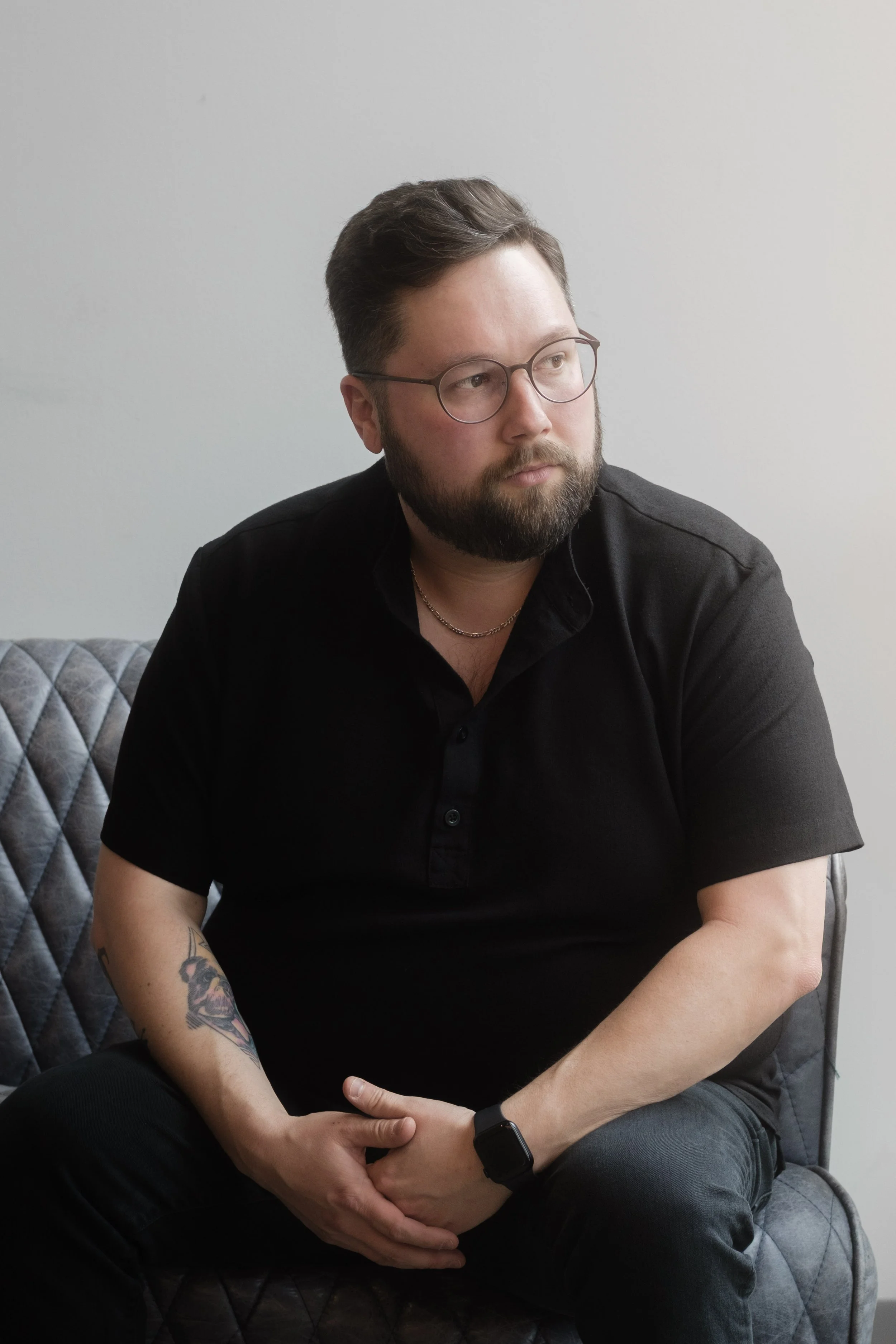
Joseph Powell is a conductor and tenor based in Memphis, Tennessee. A native of Mobile, Alabama, he is currently pursuing the Doctor of Musical Arts in Choral Conducting with a Vocal Pedagogy Cognate at the University of Memphis. Powell serves as Interim Director of the Memphis Symphony Chorus and as Artistic Director of Memphis ChoralArts.
Powell holds a Bachelor’s degree in Music Education and a Master’s degree in Choral Conducting from the University of Southern Mississippi. From 2014 to 2024, he built a thriving choral program at White Station High School, conducting the Chorale, Tenor-Bass Choir, Advanced Treble Chorus, Treble Chorus, and the award-winning contemporary a cappella group DoReHe. Under his direction, White Station ensembles appeared at the TMEA Professional Development Conference (2015, 2018) and the National A Cappella Convention, where DoReHe earned recognition as a High School Championship Finalist in 2018.
Powell’s leadership has been honored nationally and locally. He received the Country Music Association Foundation’s Music Teachers of Excellence Award (2022), was named the Orpheum High School Musical Theatre Awards’ Inspiring Teacher (2024) and is the 2025 St. Paul’s Episcopal School Distinguished Alumni in the Arts. His students’ musical theater productions garnered multiple nominations for Best Student Orchestra, earning the award in 2019. He has also been nominated twice for Shelby County Schools Teacher of the Year.
An active performer, Powell appears regularly with the Memphis Chamber Choir, Opera Memphis, and, from 2014 to 2024, the Memphis Symphony Chorus. He has been featured in opera and musical theatre productions with Opera Memphis and IRIS Orchestra. In addition to performing, he serves as Handbell Choir Director and staff singer at Calvary Episcopal Church, continuing his lifelong commitment to both artistry and community through music.
Memphis Symphony Orchestra
-
Barrie Cooper, Concertmaster
The Joy Brown Wiener Chair
Marisa Polesky*, Assistant Concertmaster
Diane Cohen, Assistant Principal
Wen-Yih Yu, Assistant Principal
Daniel Gilbert
Jordan Musgrave
Carissa Perez
Martin Palacios
Michael Kylce
Ana Maria Trujillo
Sebastian Gaviria
Dario Oliveira -
Erin Kaste, Principal
The Dunbar and Constance Abston Chair
Lenore McIntyre, Assistant Principal
Yennifer Correia, Assistant Principal
Ann Pretzer
Esther Humphries
James Ryan
Miguel Lesmes
Janaina Fernandes
Jamie Weaver
Janet Cooper -
Jennifer Puckett, Principal
The Corinne Falls Murrah Chair
Michelle Pellay-Walker, Assistant Principal
Aaron Tubergen, Assistant Principal
Beth Luscombe
Michael Brennan
Rossana Cauti
Peter Dutilly
Matthew Finley
Lenny Schranze
Andrew McGuire -
Ruth Valente Burgess, Principal
The Vincent de Frank Chair
Iren Zombor, Assistant Principal
Jonathan Kirkscey, Assistant Principal
Hannah Schmidt
Jeffrey Jurciukonis
Mark Wallace
Estefan Perez
Christine Sears
Elen Wroten -
Scott Best, Principal
Chris Butler, Assistant Principal
Sean O’Hara
Andrew Palmer
Jeremy Upton
Garrett Kirk
Tony Smith -
Shantanique Moore*, Principal
The Marion Dugdale McClure Chair
Delara Hashemi
Kelly Hermann -
Sandy D’Amato, Principal
The Paul and Linnea Bert Chair
Austin Smith -
Shelly Sublett, Principal
-
Andre Dyachenko, Principal
The Gayle S. Rose Chair
Rena Feller -
Nobuko Igarashi
-
Susanna Whitney, Principal
The Carolyn Horrell Heppel Chair
Michael Scott -
Chris Piecuch
-
Robert Patterson, Principal
The Morrie A. Moss Chair
Brittany Cooper D’Orsay
Leander Star
Jeremy Frederick
Shawn Hagen -
Scott Moore, Principal
The Smith & Nephew Chair
Betsy Carter
Mike McKenzie -
Greg Luscombe, Principal
Mark Soueidi
Mark Vail -
Charles Schulz, Principal
The Charles and Sharen Schulz Chair -
Ed Murray, Principal
-
David Carlisle*, Principal
Bill Shaltis, Assistant Principal
Stewart Plumlee
Dwight Van de Vate -
Adrienne Park, Principal
The Buzzy Hussey and Hal Brunt Chair -
Frances Cobb Kenney, Principal
The Ruth Marie Cobb Moore Chair
*Circle of Friends Artist in Residence
Memphis Symphony Chorus
Joseph Powell, Interim Director | David Cordoba, Collaborative Pianist
-
Olivia Ball
Suzanne Brockway
Alicia Butler*
Janice T. Cate
Edith Christmas
Juyoun Chung
Tamara Clark
Vonda Collins
Barbara Etheridge
Mary Geer
Roberta J. Hoppe
Jenny Johnson
Kayla Kaskal
Renee Lancaster
Alexandra McCool
Tara Nabors
Aimee Randolph
Karen C Sanders
Pamela Schnell
Addison Schwamb
Karen Tate
B.J. Webster
Ia Traci White
Cathy Wilhelm*
Laura Williamson
Rosemary Winters -
Faith Armstrong
Lily S. Axelrod
Abigail Bailey
Terry Bondurant
Cynthia Burnette
Gretchen Deupree
Kaitlyn Farris
Pamela Gold
Andrea Goughnour
Teresa Griffith
Gerre Harrell*
Christine Hughes*
Sandy Hunt
Rosalyn Hurt
M. Ann Indingaro
Cora Jones
Carolyn Kitty
Anita I. Lotz
Jill Jemison Margolin
Amanda B McGee
Lisa Lucks Mendel*
Sila Ozkara
Fedoria Rugless
Karyn Santana
Mary Seratt
Anna Shelton-Brownell*
Alison Wetherald* -
Andre Brooks
Joel Cox
Julius Dabbs
Clint M. Early, Jr
Donavon Hughes
George Martin
Dr. David McNair
David H. Schnell
Erich Shultz
David Spear
Michael Welch -
Matthew Babb
Eugene Beeler
Trent Broussard
Charles Dove II*
Jalen Gales
Bill Gaudet
Jim Jaggers*
Dayrin Jones*
John Killmar
Dallas Kiner
Marcus King
Michael Korenstein
James McClanahan*
David Patterson
Kyle Sills
Caleb Suggs
Alvin Whitney*
Lewis Wright
*Memphis Symphony Chorus Board of Directors