COPLAND APPALACHIAN SPRING
The Paul and Linnea Bert
Classic Accents Series
Robert Moody, conductor
Jennifer Gunn, piccolo
Friday, May 15, 2026 · 6:30 PM ·
Crosstown Theater
Sunday, May 17 2026 · 2:30 PM ·
Scheidt Family Performing Arts Center
Program
Symphony No. 35 in D major, K. 385, “Haffner”
WOLFGANG AMADEUS MOZART
(1756-1791)
Concerto for Piccolo and Orchestra
LOWELL LIEBERMANN
(b. 1961)
INTERMISSION
Suite from Appalachian Spring
(1944 original orchestration)
AARON COPLAND
(1900-1990)
-
Wolfgang Amadeus Mozart (1756-1791): Symphony No. 35 in D Major, K. 385, Haffner
First Performance: Vienna Burgtheater, March 1783One of Wolfgang Amadeus Mozart’s most famous symphonies, the Haffner was commissioned by Salzburg’s prominent Haffner family to honour the ennoblement of Sigmund Haffner the Younger (his father had at one time served as the mayor of Salzburg), and was composed in 1782. The work follows a standard Classical period scoring that features woodwinds in pairs, 2 horns, 2 trumpets, timpani, and strings. The expected movement forms are used, with a few minor twists here and there—for example, Mozart does not call for a repeat of the exposition in the first movement, and that a bit unusual. The gentle lyricism of movement two, and the dancelike elegance of movement three, are counterbalanced by the brilliance of the outer two movements. String players will be quick to point out the difficulties inherent in both of the fast movements, as they contain a number of infamous audition excerpts!!
Lowell Liebermann (b. 1961): Concerto for Piccolo and Orchestra, Opus 50
First performance: New York City, August 1996: New Jersey Symphony Orchestra, Glenn Cortese, conductor; Jan Gippo, soloistParaphrased from the composer’s website:
The Concerto for Piccolo and Orchestra, Op. 50 by Lowell Liebermann was commissioned by Jan Gippo, principal piccolo player of the St. Louis Symphony, for the occasion of the annual convention of the National Flute Association; the NFA also sponsored the commission. It is scored for an orchestra consisting of woodwinds in pairs, 2 horns and 2 trumpets, timpani, percussion, harp, piano, and strings.
Liebermann’s thought was to write this work for an instrument which had had virtually no concerto repertoire since the Baroque era. In doing so, he was eager to stress the lyrical and expressive qualities of the instrument, which is too often stereotyped as only being useful for brilliant and ornamental flourishes.
The work falls into three movements which are united by thematic and motivic materials, significant among which is a twelve note row which forms the basis of the second movement's variations. The final movement, which puts the seriousness of the first two movements aside for an unbridled romp, makes use of three musical quotations at strategic structural moments.
Aaron Copland (1900-1990): Appalachian Spring
First Performance: Washington, D.C. (Coolidge Auditorium), October 1944: Martha Graham Dance CompanyAaron Copland is one of America’s most beloved composers; in addition to the ballets for which he is best known, his output included film scores as well as numerous orchestral and chamber music works. Along with Billy the Kid and Rodeo, the Pulitzer Prize winning Appalachian Spring is probably the composition of his with which we are most familiar. The work was commissioned by Elizabeth Sprague Coolidge, and composed for the Martha Graham Dance Company. It was originally scored for a 13-piece chamber ensemble consisting of flute, clarinet, bassoon, piano, 4 violins, 2 violas, 2 cellos, and 1 double bass; Copland created an orchestral version of the piece in 1945 (the Memphis Symphony has performed both over the years; it is the chamber version that is being featured in this particular concert set). Divided into eight sections, the ballet takes us on a journey through a day in the life of a newly married Shaker couple (the Shakers were a small religious sect primarily located in the northeastern United States), from dawn to dusk. The polychord sequence that opens the work reappears right before the “Simple Gifts” variations, and also brings the music to a gentle and peaceful close. Interjected in between are references to fiddle tunes and barn dance music, in addition, of course, to the beautiful Shaker hymn featured in the variations.
Printable version of Program Notes can be found here.
On Stage
-
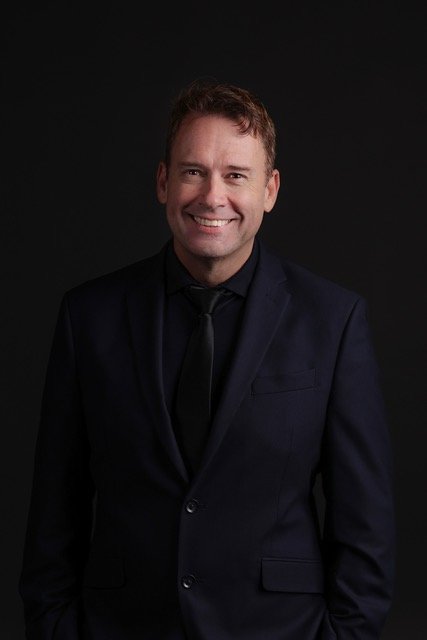
Internationally acclaimed conductor Robert Moody is now celebrating his 10th season as Music Director of The Memphis Symphony Orchestra (Tennessee), 20th season as Music Director of Arizona Musicfest, and his 2nd season as Music Director of the Baltimore Chamber Orchestra.
Under his artistic leadership, AZ Musicfest has become the premiere Winter Music Festival Orchestra in North America, boasting a roster of players from the world’s greatest orchestras. The Memphis Symphony has enjoyed exponential growth in programming, recording, and new commissions. Baltimore Chamber Orchestra boasts top players from the top orchestras in the Baltimore/Washington area and presents innovative and “out of the box” live orchestral programming at world class levels in the Mid-Atlantic.
Prior positions have included music director for both the Portland Symphony (Maine) and the Winston-Salem Symphony (North Carolina), and Principal Conductor for Lakeland Opera (Florida). Earlier in his career, he held conducting positions with the Phoenix Symphony, Evansville Philharmonic, Santa Fe Opera, Brevard Music Center, Interschool Orchestras of New York City, and apprenticed at Landestheater Opera in Linz, Austria.
Guest conducting this season includes debuts with Cincinnati Symphony, Hong Kong Philharmonic, Madison Symphony Orchestra, Philadelphia Orchestra, San Francisco Symphony, Tallahassee Symphony, and Winnipeg Symphony. He also will return to Lakeland Symphony, and lead concerts with the Royal Conservatory Orchestra in Toronto, Canada, and the IberAcademy Orchestra in Medellin, Colombia.
Maestro Moody has conducted many of the world's major orchestras and opera companies, including Chicago Symphony, Los Angeles Philharmonic, Toronto Symphony, Dallas and Houston Symphonies, Kansas-City Symphony, Minnesota Orchestra, Washington National Opera, Aachen and Baden Baden Symphony Orchestras in Germany, Wushi and Shenzhen Orchestras (China),Orquesta Filarmonica de Bogotá (Colombia), the Vienna Chamber Orchestra (Austria), Tampere Philharmonic (Finland) and Banatul Orchestra (Romania). He is also a frequent guest conductor in South Africa, returning often for concerts with the three major orchestras there – the Cape Town, Johannesburg, and KZN (Durban) Philharmonics.
A frequent collaborator with opera superstar Renée Fleming, he will conduct her on multiple occasions in the upcoming season in China, Canada, and the United States. In 2024 he performed the full orchestra world premiere of Voices of Nature: The Anthropocene, a song cycle created by Ms. Fleming in collaboration with National Geographic.
Moody’s work can be found on several commercial recordings, including the Canadian Brass albums Bach and Legends, R. Carlos Nokai’s Fourth World, and with Memphis Symphony Orchestra and trumpet legend Ryan Anthony on Re:Mission Rubato.
Robert is also a close friend and collaborator with Grammy winning composer Mason Bates. Their friendship spans over 30 years, and Moody was the first conductor to commission a full orchestral work from Bates. Robert also commissioned several major works of Mason’s, including Rusty Air in Carolina, and the much lauded Desert Transport. Last season he conducted the world premiere of Bate’s triple concerto Silicon Hymnal with the Grammy winning ensemble Time For Three.
A South Carolina native, Moody holds degrees from Furman University and the Eastman School of Music, where he earned his conducting degree with Donald Neuen. Additional studies included an undergraduate study abroad in Vienna, Austria, and a summer of study with Otto Werner Mueller at Le Domaine Forget in Quebec. He is a Rotarian, and has served on the boards of AIDs Care Services, Winston-Salem YMCA, WDAV Classical Radio, and the Charlotte Master Chorale.
Moody celebrates the life and work of organist/conductor Jimmy Jones, his spouse of 18 years who passed away unexpectedly early in 2024. He now dedicates all his musical endeavors to Jimmy.
Moody lives in Memphis with their two dogs; he is an avid runner, swimmer, history buff, “Jeopardy!” addict, and snow-skier.
-
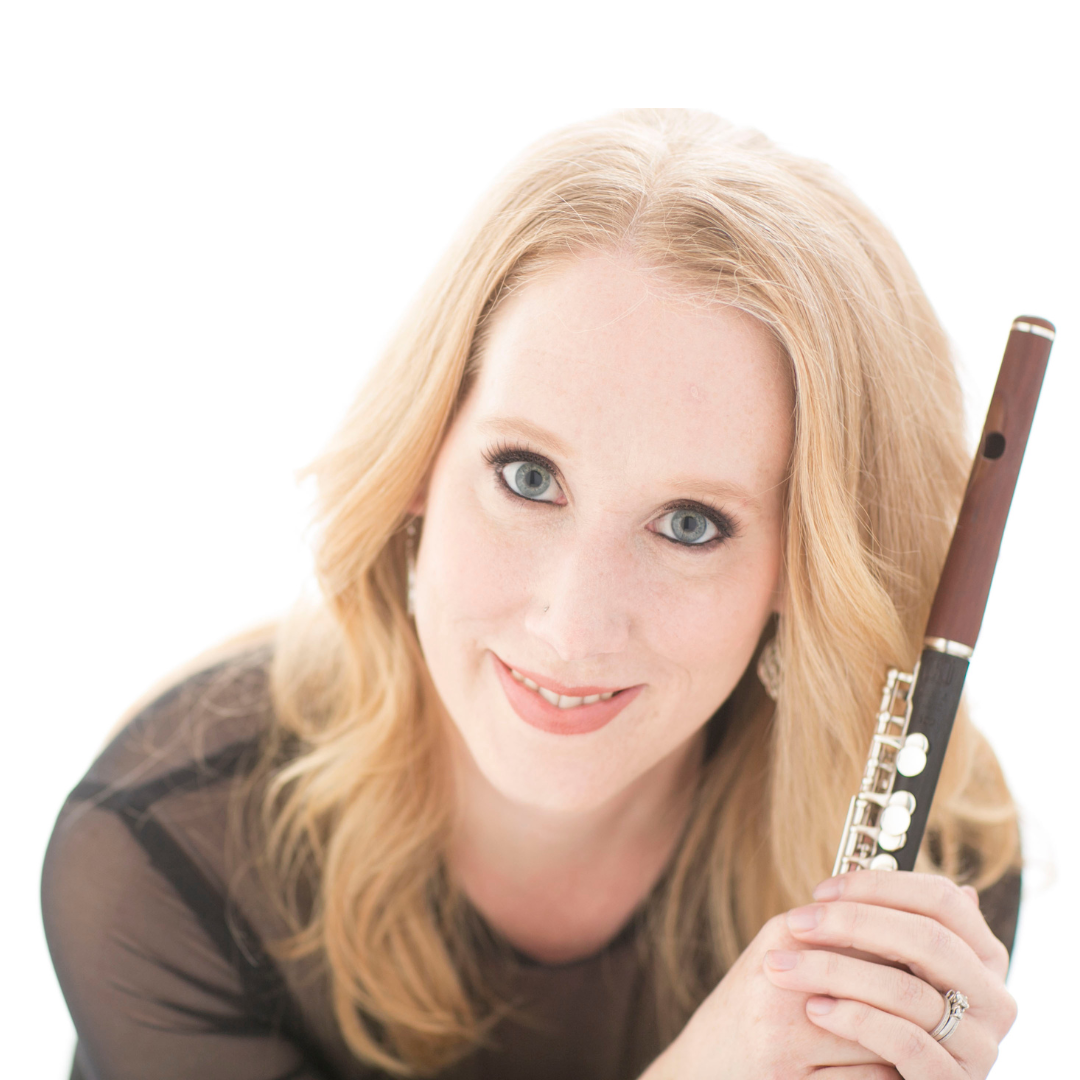
Hailed for her “virtuosic poise” by the Chicago Tribune and as “a dazzling piccolo virtuoso” by the Palm Beach Daily Herald, Jennifer M. Gunn was appointed to the position of Piccolo of the Chicago Symphony Orchestra by Maestro Daniel Barenboim in 2005. In December 2020, the position was endowed as the Dora and John Aalbregtse Piccolo Chair.
Since joining the CSO, she has been active in the life of the Orchestra in many ways including performances on the CSO’s contemporary music series, MusicNow, CSO Chamber series, and the Once Upon a Symphony series designed for families with young children. Gunn serves as a piccolo and flute coach for the Civic Orchestra of Chicago, participated in the Dream Out Loud Music Education Advocacy Campaign and joined Maestro Riccardo Muti for several of the programs for at-risk and incarcerated youth at Chicago area juvenile justice centers.
Equally at home on the flute or the piccolo, Gunn has been featured as a soloist with the Orchestra on many occasions. She made her flute solo debut under the direction of Ludovic Morlot on the MusicNow series playing Shirish Korde’s Nesting Cranes in 2007. One year later, she made her piccolo debut under the direction of Harry Bicket playing Vivaldi’s C Major Concerto RV443 on the CSO’s subscription series. Gunn has also been featured as a flutist on Bach’s Brandenburg Concerti with her CSO colleagues under the direction of both Nicholas Kraemer and Pinchas Zukerman. In March of 2019, Gunn was featured as piccolo soloist under the direction of Music Director Riccardo Muti, playing Vivaldi’s C major Concerto RV444, in addition to playing the CSO premiere of Ken Benshoof’s Concerto in Three Movements for Piccolo and Orchestra. In August of 2022, she gave the world premiere of Thea Musgrave’s newly orchestrated piece, Piccolo Play, at the National Flute Association Convention in Chicago under the baton of Leonard Slatkin.Gunn has enjoyed many occasions to join musician colleagues from the Chicago area and around the world in a variety of performance settings. In the Chicago area, she has been a guest with the Bach Week Festival, Dempster Pro Musica, Music of the Baroque, Rembrandt Chamber Players, and the Civitas Ensemble. Outside of Chicago, Gunn has enjoyed collaborating with musicians at music festivals such as the Sunflower Music Festival in Topeka, KS, Buzzards Bay Music Fest in Marion, MA, Arizona MusicFest in Scottsdale, AZ, and the St. Barth’s Music Festival in St. Barthelemy, French West Indies. She can be heard on recordings featuring the music of composers Mason Bates, Anna Clyne, and Victoria Bond, as well as CSO orchestra recordings on the CSO Resound Label.
In demand as a clinician, Gunn has taught masterclasses around the world including a regular summer class at Orford Musique in Canada and served as a guest artist at the 2018 International Piccolo Festival in Grado, Italy. She is a frequent guest at universities around the country, teaching flute and piccolo masterclasses including classes at Carnegie Hall, The Manhattan School of Music, University of Texas Butler School of Music, University of Illinois at Urbana-Champaign, University of Missouri- Kansas City, and the Royal Conservatory of Music’s Glenn Gould School. Gunn has also been involved as an orchestral coach with the National Youth Symphony (NYO), and the New World Symphony. Gunn is on the faculty at the Northwestern University Bienen School of Music.
Gunn has held previous orchestra positions including Assistant Principal Flute of the Louisville Orchestra, Principal Flute of the Fort Wayne Philharmonic, and Second Flute of the Wheeling Symphony. She holds a Bachelor of Music Degree from the Mary Pappert School of Music at Duquesne University (PA), where she studied with Robert Langevin and Rhian Kenny. She had additional studies at the University of Akron (OH) with George Pope and Mary Kay Robinson.
She is married to Jonathan Gunn, Associate Professor of Clarinet at University of Texas Butler School of Music.
Memphis Symphony Orchestra
-
Barrie Cooper, Concertmaster
The Joy Brown Wiener Chair
Marisa Polesky*, Assistant Concertmaster
Diane Cohen, Assistant Principal
Wen-Yih Yu, Assistant Principal
Long Long Kang
Michael Klyce -
Erin Kaste, Principal
The Dunbar and Constance Abston Chair
Lenore McIntyre, Assistant Principal
Yennifer Correia, Assistant Principal
Carissa Perez
James Ryan
Ann Pretzer -
Jennifer Puckett, Principal
The Corinne Falls Murrah Chair
Michelle Pellay-Walker, Assistant Principal
Aaron Tubergen, Assistant Principal
Beth Luscombe -
Ruth Valente Burgess, Principal
The Vincent de Frank Chair
Iren Zombor, Assistant Principal
Jonathan Kirkscey, Assistant Principal -
Scott Best, Principal
Chris Butler, Assistant Principal -
Shantanique Moore*, Principal
The Marion Dugdale McClure Chair
Delara Hashemi -
Lani Smith*, Principal
The Paul and Linnea Bert Chair
Saundra D’Amato, Assistant Principal -
Andre Dyachenko, Principal
The Gayle S. Rose Chair
Rena Feller -
Susanna Whitney, Principal
The Carolyn Horrell Heppel Chair
Michael Scott -
Caroline Kinsey, Principal
The Morrie A. Moss Chair
Robert Patterson -
Scott Moore, Principal
The Smith & Nephew Chair
Elizabeth Carter -
Ed Murray, Principal
-
David Carlisle*, Principal
-
Adrienne Park, Principal
The Buzzy Hussey and Hal Brunt Chair -
Frances Cobb Kenney, Principal
The Ruth Marie Cobb Moore Chair
*Circle of Friends Artist in Residence