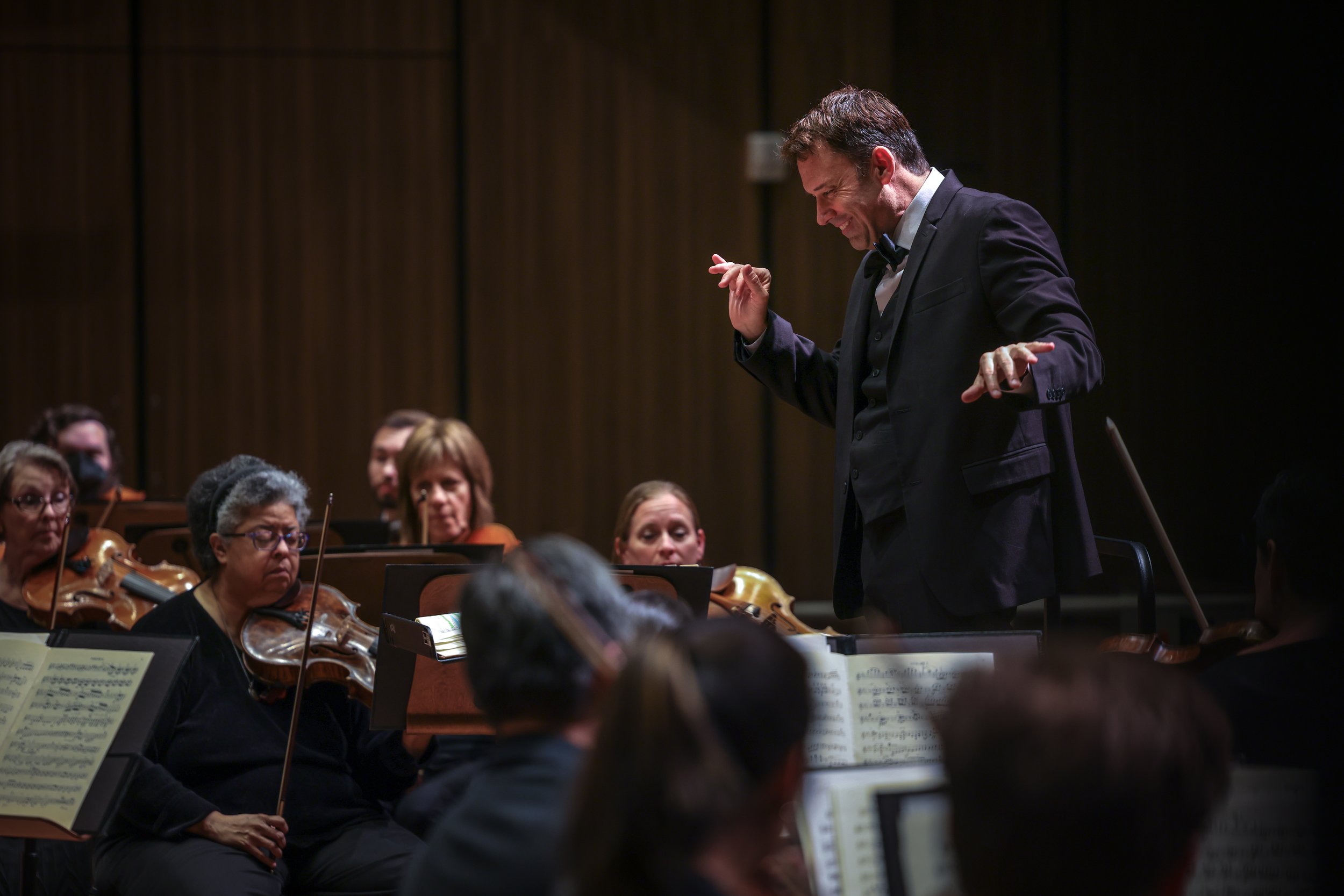
THE BRITISH ISLES - MENDELSSOHN “SCOTTISH” AND DANNY BOY
Friday, March 28, 2025 · 6:30pm ·
Crosstown Theater
—————————
Sunday, March 30, 2025 · 2:30pm ·
Scheidt Family Performing Arts Center
Eckart Preu, conductor | Hannah White, violin
PERCY ALDRIDGE GRAINGER
(1882 - 1961)
Irish Tune from County Derry
SAMUEL COLERIDGE-TAYLOR
(1875 - 1912)
Concerto for Violin in G minor, op. 80
I. Allegro maestoso
II. Andante semplice
III. Allegro molto
Hannah White, violin
INTERMISSION
FELIX MENDELSSOHN
(1809 - 1847)
Symphony No. 3 in A minor, op. 56, “Scottish”
I. Andante con moto - Allegro agitato
II. Scherzo assai vivace
III. Adagio cantabile
IV. Allegro guerriero - Finale maestoso
Program Notes
by Michelle Pellay-Walker
Percy Aldridge Grainger (1882-1961): Irish Tune from County Derry
Originally from Australia, Percy Aldridge Grainger is primarily known as a concert pianist and composer; his fascination with British folk music not only influenced his own writing style, but also played a prominent role in the arrangements for which he is so widely regarded. The Irish Tune from County Derry, perhaps better known to many as the Londonderry Air (or Danny Boy), is a traditional Irish folk tune that is closely associated with County Londonderry (County Derry), one of the six counties comprising Northern Ireland. Jane Ross submitted the tune to George Petrie for publication in The Ancient Music of Ireland, which was published in 1855. Grainger set the tune for different instrumentations several times between 1911 and 1920; this concert features the version for strings and two french horns. The lush, rich scoring heard over the course of two verses has made this one of the most popular versions for audiences over the decades, and indeed, it is as much of a joy to play as it is to listen to.
Samuel Coleridge-Taylor (1875-1912): Concerto for Violin in G Minor, Opus 80
First Performance: Norfolk Connecticut Music Festival, Maud Powell, soloist: June 1912
Afro-English composer Samuel Coleridge-Taylor was well-established in his field by 1898, when he first met American violinist Maud Powell on the occasion of her London debut (she had performed his Gipsy Suite as part of her repertoire, and would introduce the piece to the American public several years later). Their collaborative efforts on either side of the Atlantic Ocean proved fruitful, eventually leading to the writing of the Violin Concerto in G Minor in 1910; it was written specifically for her, and is dedicated to her. The three-movement work is scored for woodwinds in pairs, four horns, two trumpets, timpani, and strings. While originally intending to base the concerto on spirituals, Coleridge-Taylor ultimately decided to use his own thematic materials instead, resulting in a work that varies between the lyrical as well as the rhapsodic. The story of the original parts and score going down during the sinking of the Titanic is just that—a tall tale, as the parts were in fact shipped on another vessel; even so, they had to be hastily recopied after being lost in front of the premiere performance!! The collaboration between these two gifted artists is truly significant from a cultural standpoint, making a definitive statement in regards to the excellence of both black and female musicians. Sadly, Coleridge-Taylor was unable to attend the concerto’s premiere, and succumbed three months later to pneumonia. The Violin Concerto is one of the last of his works to be published during his lifetime.
Felix Mendelssohn (1809-1847): Symphony No. 3 in A Minor, Opus 56, “Scottish
First Performance: Leipzig Gewandhaus: March 1842
While on his initial visit to the British Isles, in 1829, German composer Felix Mendelssohn had the opportunity to visit the ruins of Holyrood Chapel, at Holyrood Palace in Edinburgh, Scotland. He wrote the following description to his family:
“In the deep twilight we went today to the palace where Queen Mary lived and loved...The chapel below is now roofless. Grass and ivy thrive there and at the broken altar where Mary was crowned Queen of Scotland. Everything is ruined, decayed, and the clear heavens pour in. I think I have found there the beginning of my "Scottish" Symphony.”
Alongside this brief description, Mendelssohn also included a few bars of music that would ultimately become the first movement’s opening theme. Work on the symphony occurred sporadically over the course of 13 years, from 1829 to 1842, with the premiere performance taking place in June of 1842. By that time, he was no longer referencing it as “Scottish,” though audience members have kept up the nomenclature in the years following his passing. The work is scored for woodwinds in pairs, four horns, two trumpets, timpani, and strings, and the movements are intended to be played without pause. The first movement begins with a slow introduction, before continuing in a sonata form that has been described as “dark and stormy.” The second moment is very dancelike in its character, reminiscent of a scherzo despite its duple meter. The gentle lyricism of movement three could be a lullaby, with movement four returning the listener to the feel of a dance, before the almost hymnlike Coda that brings the symphony to its triumphant conclusion.
On Stage
-
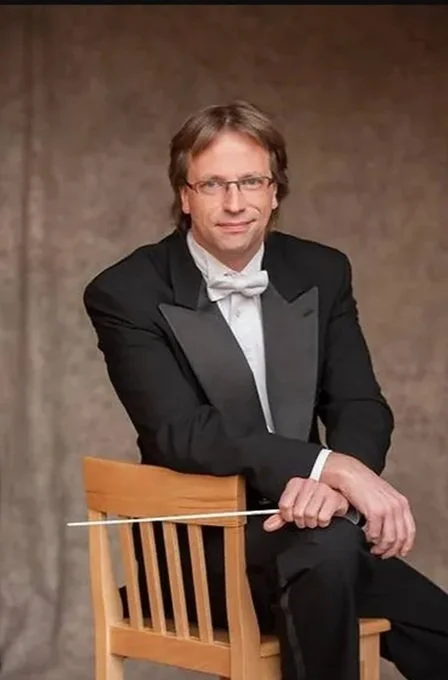
Eckart Preu is Music Director of the Long Beach Symphony, the Portland Symphony, and the Cincinnati Chamber Orchestra.
Previously, he held positions of Music Director with the Spokane Symphony (WA) and Stamford Symphony (CT), and served as Associate Conductor of the Richmond Symphony (VA), and Resident Conductor of the American Symphony Orchestra (NY). In Europe, Mr. Preu was Music Director of the Orchestre International de Paris from 1993-95.
His guest conducting engagements have included concerts with the Jerusalem Symphony (Israel), Auckland Philharmonia (New Zealand), Philharmonic Orchestra of Jalisco (Mexico), Philharmonic Orchestra of Bogota (Columbia), State Orchestra in Halle (Germany), Christchurch Symphony (New Zealand), and multiple appearances with the Symphony Orchestra of Chile, and the Symphony Orchestra of Tenerife (Spain).
A sought-after guest conductor in the US he has appeared with the American Symphony, Knoxville Symphony, Eugene Symphony, Memphis Symphony Orchestra, Delaware Symphony, Duluth Superior Symphony, Fairfax Symphony Orchestra, Wichita Symphony, and others.
Career highlights include performances at Carnegie Hall, the Sorbonne in Paris, and projects with Violins of Hope in Cincinnati, Long Beach, and Portland.
His first commercial recording was the world premiere of “Letters from Lincoln”, a work commissioned by the Spokane Symphony from Michael Daugherty, featuring baritone soloist Thomas Hampson. With the Portland Symphony Orchestra, he recorded the first commercial recordings of Arturo Marquez’ “Mascaras”, Ana Lara’s “Angeles de llama y hielo” (Angels of Flame and Ice), and Enrico Chapela’s “Rotor”.
He has collaborated with internationally renowned soloists including Sarah Chang, Pepe Romero, Arturo Sandoval, Stephen Hough, Evelyn Glennie, Anne Akiko Meyers, Jeremy Denk, Leila Josefowicz, Louis Lortie, Richard Stoltzman, and many others.
A native of Germany, Mr. Preu earned a master's degree in conducting from the Hochschule für Musik in Weimar studying under Gunter Kahlert. He also studied under Jean-Sebastien Bereau at the Conservatoire National Supérieur de Musique de Paris in France. Mr. Preu’s education was made possible by scholarships from the Herbert von Karajan Foundation, the Konrad Adenauer Foundation, and the French Ministry of Culture.
Eckart Preu’s early musical training was in piano and voice. At the age of 10, he became a member of the Boys Choir Dresdner Kreuzchor and went on to work with them as soloist, rehearsal pianist, and Assistant Conductor.

-
Described by New York Concert Review as “phenomenal”, Award-winning Black female violinist, Hannah White, pursues to be an authentic and relatable voice in today’s changing landscape of classical music.
Hitting her tempo as a soloist, Hannah soloed with the Milwaukee Symphony Orchestra at age nine and has been featured on stage across four continents ever since. Ms. White has soloed with symphonies as Cleveland Symphony Orchestra, Dallas Symphony Orchestra, New World Symphony Orchestra, Albany Symphony Orchestra, Syracuse Symphony Orchestra, Ann Arbor Symphony Orchestra, Hudson Valley Philharmonic, South Bend Symphony Orchestra, Symphoria Orchestra, Milwaukee Symphony Orchestra, San Francisco Chamber Orchestra, Madison Symphony Orchestra, Buffalo Philharmonic Orchestra, Sphinx Symphony Orchestra, and Orchestra Noir among many others. Hannah’s performances have earned dozens of reviews.
At Carnegie Hall, Hannah was featured as a soloist, twice, and as a duet earning standing ovations and raving reviews at all three sold-out concerts. Hannah soloed on four national and international tours with Sphinx Virtuosi, was concertmaster of two international tours with Chineke, and concertmaster and co-artistic director of three tours with Kontrapunktus Baroque. She performed for world leaders at World Economic Forum in Davos, Switzerland. She soloed at League of American Orchestras National Conference, Music Teachers National Association National Conference, Dame Myra Hess recital series, Moscow Ballet, and Wolf Trap. Hannah is featured on Rachel Barton Pine’s Music by Black Composers CD. Hannah has collaborated with Thodos Dance Chicago, Fulcrum Point, Torq Percussion Quartet, principal members of the Chicago Symphony Orchestra, Dance Center Evanston, Schaumburg Ice Skaters, Chicago Children’s Choir, and Pentatonix’s Kevin Olusola, among others.
Ms. White has performed with top pop artists as Rhihanna, Billie Eilish, John Legend, Steve Lacey, Busta Rhymes, H.E.R., Earth Wind and Fire, Bell Biv Devoe, Billy Porter, Coco Jones, Lucky Daye, and Chaka Khan among many others. She has performed at the Oscars Awards, BET Awards, ESPYs Awards, Oscars Academy Museum Gala, and has worked with producers for movie sound tracks, music videos, albums, and animes.
Hannah has been invited to perform in prestigious venues such as Carnegie Hall, Severance Hall, Adelaide, Australia, Wigmore Hall London, England, Davos, Switzerland, Queen’s Hall, Edinburg, Scotland, Sau Paulo, Brazil, Kennedy Center, Trinity College Cambridge, England, Rock and Roll Hall of Fame, Dolby Theater, Ordway Center, Harris Theater, Ravinia, New World Center, Disneyland, Hill Auditorium, Hollywood Bowl, Morris Theater, Greek Theater, and Meyerson Center, Orchestra Hall, John’s Smith Square, London, England, Wolf Trap, Concert Hall, Caroline H. Hume Concert Hall, Zipper Hall, Aspen Music Camp, Hill Auditorium, Dalton Center, Folly Theater, Gallery of Art Museum, Rackham Auditorium, Rockefeller University, and University of Austin among many more.
Media appearances of Hannah White include: CNN, BBC, Today Show International in Davos, Switzerland, ABC, Amazon Live, Twitch, BET, CNBC International, Chicago’s WFMT, NPR’s From the Top, WCLV, WVIZ, Ideastream, Classical MPR, MPTV’s Black Nouveau, WPT, DPTV, Al Jazeera, Spark Media’s mini documentary series, Strad Magazine, Strings Magazine, Bein and Fushi Magazine, The Violin Channel, and numerous newspapers throughout United States.
Ms. White has won 1st prize at dozens of competitions at the Regional, National, and International Level both as soloist and chamber player. Hannah is recipient of the prestigious Isaac Stern Award at Carnegie Hall, Ambassador of Doublestop Foundation, Jack Kent Cooke Scholarship, Musicians Club of Women of Chicago Scholarship, MPower Grant, Puth Foundation, William Warfield Scholarship, and Music Institute of Chicago Fellow Laureate.
Hannah believes in giving back to her community through imparting her world class training to kids of all social and economic status. She boasts of her participation in residencies at Columbia University, Penn State, University of Houston, and San Jose State University. She has taught at various high schools and given master classes throughout United States. She is currently teacher at Colburn School’s Jumpstart, Stories and Strings, and USC/Colburn Programs. She is also faculty at Santa Monica Conservatory of Music and Montebello Royal Academy. As cultural ambassador, Ms. White has performed at over 100 outreaches.
Hannah graduated from the Colburn Conservatory studying with renowned teacher, Robert Lipsett. She is continuing her graduate studies with Robert Lipsett at the Colburn Conservatory. Her previous teacher is Danielle Belen through the Music Institute of Chicago, The Academy. Hannah’s violin is on generous loan from Rachel Barton Pine Foundation.
Memphis Symphony Orchestra
Violin I
Barrie Cooper, Concertmaster
The Joy Brown Wiener Chair
Marisa Polesky, Assistant Concertmaster
Diane Zelickman Cohen, Assistant Principal
Wen-Yih Yu
Jessica Munson
Janaina Fernandes*
The Rebecca Webb Wilson Fellow
Violin II
Gaylon Patterson, Principal
The Dunbar and Constance Abston Chair
Erin Kaste, Assistant Principal
Lenore McIntyre, Assistant Principal
Yennifer Correia
Daniel Parker*
The Judith and Sheldon Korones Memorial Fellow
Priscilla Tsai
Viola
Michelle Pellay-Walker, Principal
The Corinne Falls Murrah Chair
Aaron Tubergen, Assistant Principal
Beth Luscombe, Assistant Principal
Michael Brennan
Cello
Ruth Valente Burgess, Principal
The Vincent de Frank Chair
Jonathan Kircksey, Assistant Principal
Hannah Schmidt
Bass
Scott Best, Principal
Chris Butler, Assistant Principal
Flute
Shantanique Moore, Principal
The Marion Dugdale McClure Chair
Delara Hashemi
Oboe
Saundra D’Amato, Principal
The Paul and Linnea Bert Chair
Lani Kelly, Visiting Oboe
Clarinet
Andre Dyachenko, Principal
The Gayle S. Rose Chair
Rena Feller
Bassoon
Marissa Takaki, Principal
The Carolyn Horrell Heppel Chair
Daryn Zubke
Horn
Jeremiah Frederick, Principal
The Morrie A. Moss Chair
Robert Patterson, Assistant Principal
Parker Nelson
David Renfro
Trumpet
Elizabeth Carter, Principal
The Smith & Nephew Chair
Benjamin Lewis
Trombone
Greg Luscombe, Principal
Mark Soueidi
Mark Vail
Timpani
Ed Murray, Principal
*Circle of Friends Fellow
DONORS
THANK YOU! Individuals, corporations, foundations, ArtsMemphis, the Tennessee Arts Commission, and others make annual contributions to support the Memphis Symphony Orchestra. The following community members have expressed their support for the Memphis Symphony for the 2023 - 2024 Season.
-
ArtsMemphis
Paul and Linnea Bert
City of Memphis
Community Foundation of Greater Memphis
The Estate of Donna Fisher
Carolyn and Scott Heppel
International Paper Foundation
Kevin Roper
Scheidt Family Foundation
Tennessee Arts Commission
Joy Wiener -
Jack Belz
Ron and Anise Belz
Estate of J. Richard and Carole M. Briscoe
Jere Gerard
Suzanne Gronemeyer
Bernice Hussey and C. Hal Brunt
Masanori and Seiko Igarashi
Korones Family Foundation
Orion Federal Credit Union
Ann L. Powell
John and Ashley Remmers
Roadshow BMW, Inc.
Shelby County Government
Linda and Ron Sklar
Candace Steele Flippin
Thomas W. Briggs Foundation
Jack Ward
Rebecca and Spence Wilson -
Peter and Jessica Abell
Bert and Carol Barnett
Alice Rawlins and Phil Burnett
Elizabeth and Charles Carter, Jr.
Maria and Michael Douglass
David and Susan Ellison
Elvis Presley Charitable Foundation
Katherine Buckman-Gibson and J.W. Gibson
Pam and Steve Guinn
Dorothy Kirsch
Edwin Koshland
Robert and Mary Nell Kuhlo
Eva Lang and Scott LeMay
Dinah and Gary Makowsky
Amy and Tony Milam
Linda Milbradt
Henry and Snowden Morgan
Thomas and Sue Nesvick
Nike, Inc.
Trezevant Manor
Trustmark Bank
Henry Turley Company
Nancy Walker -
Stephen Agar
Louise and Will Barden
Henry and Janet Bartosch
Reed Baskin and Alice Nishiwaki
Stanley and Dot Bilsky
Karen Bowyer
Arthur and Michelle Buring
Copland Foundation
Sara Holmes
Lowry and Laura Howell
Donna Jefcoat
Dr. Carol Johnson-Dean
Ellen Klyce
Bruce and Susanne Landau
Ann and Dudley Langston
Al and Janet Lyons
Elizabeth and Jerry Marshall
Elisa and Ramon Marus
Irma W. Merrill
Alan and Zoe Nadel
Tim Nicholson
Robert Patterson and Patricia Gray
Samuel & Anna Robbins
Laretha R. Sargent
Stephen and Deborah Schadt
Jane and Bruce Smedley
Paul Thomas
Deborah Dunklin Tipton Charitable Fund
Otis and Marilane Warr
Barry and Cynthia A. White -
Fran and Peter Addicott
Belinda and Calvin Anderson
Rodney Baber
Joey and Neal Beckford
Christopher and Helen Bird
Betty Blaylock
Robert and Sheryl Bowen
Paul Brezina
Rose Merry Brown
Paul and Suzanne Burgar
Canale Foundation
Carol Lee and Joe Royer
Anne Carriere
Daniel Case
Shelly Cheng
Gloria Cherry
Karen Clawson
Lisa Courtney
Elaine Crown
Carol Cummings
Cynthia Ham
Gay Daughdrill Boyd
Blanche Deaderick
Leila Dodge
Jim Dorman
JT Elliott
William Etnyre
Eyleen Farmer
Farrell Calhoun, Inc.
Jim and Susan Fletcher
Fred and Mary Lawrence Flinn
David and Luann Forell
Susan Frazee
Juan Fuentes
Pamela Gold
Billie and J. Russell Goodloe, Jr.
Devon Gosnell
Jerrold and Martha Graber
Charles and Miriam Handorf
Carolyn Chism Hardy
Galen and Debi Havner
Page Henrion
Marisa and Paul Hess
Nancy Howell
Joanna Hwang
Frank and Jeanne Jemison
David and Lisa Jennings
Edith Kelly-Green
Kevin Danish
Sandra Kincaid
Yoriko Kitai
Barbara Lapides
Lucy and Tom Lee
Barbara McConville
Douglas McNamara
Lisa & Maurice Mendel
Rodgers Menzies
Jeanie Mercer and Breen Bland
Jan and Scott Morrell
Rosalyn Nichols
Cecile and Frederick Nowak
Marianne Parrs
John Pickens
Kenneth Prince
Judy Ringel
Rose Montgomery Johnston Family Foundation
Gayle Rose
Diane Rudner
Beverly and Ken Sakauye
Nick Sarraf
Dale Schaefer
Mary Scheuner
Samuel and Leanne Scull
Eddie & Mary Seratt
Jerry Sharp
Cynthia Spangler and Charles Askew
John and Cristina Speer
Richard and Trish Spore
Mary Stagg
James and Susan Sullivan
Dr. D. Parker Suttle
Joan Terry
Diane Thornton
Catherine Todd
Melissa Todd
Donald Tucker
Lura and Steve Turner
Michael and Andie Uiberall
Susan Van Dyck and James Newcomb
Bill and Carmine Vaughan
Dianna Voyles
Dr. Lee and Mary Linda Wardlaw
Graham and Megan Warr
Betty and Jules Weiss
Benton Wheeler and Aimee M. Christian
Linda Wible
David and Dorothy Work
Mary Wurtzburger
Jocelyn Wurzburg
Susan Yount
Lyn and Gordon Yukon
Dennis Zolper -
David Adair
Adam Shirley
Lou Adams
Susan Adams
Thea Adell
Lyman and Sally Aldrich
Roosevelt and Joann Allen
Allison Arguello
Alyssa Hester
Amro Music Stores
Paula Amrod
Amy Guenrich
Anand Srinivasan
Andrew Fields
Andrew Nichols
Angela Bryant Sykes
Anne Freres
Frank Anthony
Eleanor Appling
Ardelle Walters
Scott and Kim Arnwine
Philip and Carol Aronoff
Anne Ayres
Azizah Young
Matthew Babb
Mary Allie Baldwin
Olivia and Veneta Ball
Cecilia Barnes
Nancy Barnhart
Barry Godwin
Nancy Bass
Charles and Syrena Beall
Jean and Jeffrey Bedwell
Brad and Penelope Behnes
Charles Belenky
Gary and Sheila Bentley
Marie-Stéphane Bernard
Bethany Ross
Betsy Kelly
Gerald and Judith Bettice
Nathan Bicks and Andrea Bienstock
Hal and Peggy Bishop
Matthew Bishop
Jack and Kathleen Blair
Serena Blais
Thomas Bohn
Judith Bookman
Stefan and Anne Borst
Mary Borys
Henry Boyd
James and Martha Boyd
Debbie Branan
Carole Branyan
Brenda Cox
Brian Harrington
Ruby Bright
Harold H. Brown
Stephen Brumfield
Mary Beth and Tom Bryce
Charles and Susan Burnett
Michael and Suzanne Burnett
Stephanie Caldwell|
RaMona Callahan
Candace Dolls
Kathryn Cannon
Colleen Capstick
Carlos Gonzalez
Carole McKellar
Jeanne Carr
Gale Carson
Linda Carter
Casey Canady
Jackie Cash
Catherine Eyrich
Catherine Sullivan
Frank Chalona
Charity Zeiset Williams
Chase Harris
Cheryl Frank
Joan and Patricia Chesney
Ruby Chittenden
Chris Kenny
Chrissy Geibel
Barbara Christensen
Christopher Avis
Christopher New
Chunte Hsu
Jim Clark
Shirlee Clark-Barber
Susan Clement
John Coats
J.B. Cochran
Sheila and Robert Cohen
James and Joy Coleman
Chelsea Conn
Barbara and Leo A Connolly
Contrina Huffman
Frances Cooper
Grace & Gary Copeland
Cora Adams
Jim and Pat Corbitt
Corinda Shelley
Martha Ann Corlew
Courtney Reeves
Rebecca Courtney and Bobby
Rogers
Katherine Cowan
William and Margaret Craddock
Ed and Laura Crawford
Paola Crocker
V. Glenn and Nancy Crosby
Edwin Cunningham
Dabney Raburn
Barbara and Ray Dan
Dana Lynn
Dane Perugini-Cripps
A.J. Daneman
Susan Daniel
Danny Ray
Victor Dansk
Darcus Greene
David O'Brien
David Wade
Leo Davis
Susan Davis
Dean Massey
Maria DeBacco
Deborah Bledsoe
Deborah Harrison
Debra Herr
Declan Bennett
Dee Lofton
Renee DeRossitt
Kathryn Deshpande and Jon Katze
James and Lucy Digmon
Lee Dixon
Elizabeth Domico
Gregory & Esther Donnenworth
Peter Doorley
Dorothy Simien
William and Jane Drummond
Regina Duberstein
Alice and John Dudas
Ralph Duncan
Eileen Hogan
Elizabeth Keough
Elizabeth Umstot
Jeanne Ellett
Hallie Elliot
Julie Ellis
Joy Ellison
John and Laura Engbretson
Eric Fox
Evan Hurst
Marsha Evans
Rebecca Evans
V. Lynn Evans
Jackie Falls
Pat Faudree
Patrick and Griselda Fellmann
Edward and Gloria Felsenthal
Allan and Helen Ferguson
Jose and Mylene Ferrolino
Elaine Fetzer
Carl and Donna Flinn
Lori Franklin
Mary W Freeman
Martha and Noel Frizzel
Gabrielle Summers
Karen Gagnon
Adam Gahn
Elizabeth Garat
Hector Garcia
Kathleen Gardner
Kathryn Gardner
John and Kim Gaskill
Phyllis Gay
Sally Gentry
George Johnson
Germantown Church of Christ
Billie Gholson
Cynthia Gholson
Charles Gilder
Luanne Gillock
Christy Gilmour
Ginny Yeager
Marylon Glass
Richard Glassman and Susan
Lawless-Glassman
Penny and Howard Glatstein
Glinda Rhodes
Gloria White
Henry Goddard
Franklin and Katherine Godoy
Nancy and Sonny Golden
Robert and Kate Gooch
Andrea and Mike Goughnour
Grace-St. Luke's Episcopal
Janet Grant
Shirley Gravenor
Maxine Gray
Katherine Green
Grey White Paws Inc.
Anyu Gu
Lesley Gudehus
Phyllis Guenter
David and Pamela Hallin
Clarence and Harriett Miller Halmon
Claudia and Bill Haltom
Melissa Hamilton
Alan & Kathy Hammond
Sandra Harper
Albert and Nancy Harvey
Cynthia Heard
Niki Hemness
Julie and Kimbrough Henley
Carolyn N Henry
Deborah Hester Harrison
Bob and Martha Hester
Larry Hilbun
Martin and Rosemary Hill
Rosemary Hill
Walter Hoehn
Lewis and Lunida Holland
Honeybird Foundation
Eula and Rob Horrell
Lynne Hostetler
Mary and Larry Houk
Elizabeth and Horace Houston
Julia Howell
Dr. Mary Lin Hudson
Hugh Chisholm
Marilee Hurley
John and Paula Stack-Hurt
Hyde Family Foundation
Nobuko Igarashi
Frank and Susan Inman
Janas Jackson
Laurita Jackson
James and Natalie Jalenak
LR and Peggy Jalenak
Jamie Herren
Janet Dillard
Daisy Jefferson
Jeffrey Land
Jennifer George
Jennifer Pierce
Jennifer Wilczynski
Susan Jennings
Johnny B Tate Jr
Kay and Warren Johnson
Robert Johnson
Stacey Johnson
Jon Briggs
Jon Hawk
Janet Jones
Mott Jones
Teresa Jones
Joseph D'Agostino
Josh Rosa
John and Lynn Joyner
Royce & Sirella Joyner
Judy Weatherly
Nora Kaltakdjian
Karen McKenzie
Kason Irvin
Edward and Lawryn Kasper
Katrica Hayslett
William Keiser
Robert Keith
Lynne Keller
Mary Kelly
Kevin Sublett
Cynthia King
Juliette Kippen
Albert Kirk
William Kratzke
Judy Kriger
Kroger
Lisa Krupicka
Leslie Kuharich
Aurelia Kyles
Shirley Kyles
Debra LaBarreare
Grant LaClave
Lakeisha Williams
Nathaniel Landau
Madeleine Landrum-Noe
Jennifer Lane-Watson
Bob Langston
LaTesha Coleman
Latoya Garcia
Latrice Holmes
James and Jennie Latta
Mary Layton
Karie Leatherman
Katherine Lee
Leighanne Timmerman
Barbara Levingston
Linda Cook Walker
Linda McKnight
Terri E. and Gary Lindquester
Lauriann Lines
Lisa Igoni
Lisi Belz McCarthy
Lester and Roslyn Lit
Deborah and Melvin Litch
Beverly Littlejohn
Karl Loeblein
Thomas Lostritto
Joey Lott
Babbie Lovett
Nathan and Marilyn Lubin
Nathaniel Lunceford
Charlton Lyons
Jennifer Lyons
Evelyn Makowsky
Deidre Malone
Margaret Nations
Maria Petkova
Mark Quest Ajoku
Marlene Remus
Anca Marr
Martha Lyle Ford
Martin Hand
Montgomery and Laura Martin
Mary Day
Mary Lee Hall
Mary Mulroy
Barbara Mashburn
Toni Mason
Emily Matheny
Matt Williams
Bacarra Mauldin
Mauricio Calvo
Dorothy Mayse
Mary Lou McCaa
James McClanahan
Don and Peggy McClure
Marion McClure
Mark and Ashley McClure
Charles and Janie McCrary
Richard and Lori McFalls
Don and Sunshine McKinnon
John and Michelle McKissack
Alexander and Margaret McLean
Anita and Don McLean
Gretchen and Kojo McLennon
Bill McManus
Norann McManus
Major and Linda McNeil
Jean and Michael McSwain
M. Catherine Meadows
Dan and Amy Meadows
Logan and Simone Meeks
Diane Meess
Melissa Eudaly
Memphis Symphony Chorus
Lynn Menendez
Silvia Alicia Merediz
James Mertzlufft
Thomas Miles
Mindy Huddleston
Hubert and Elizabeth Minton
Mio Donley
Vance Montgomery
Kent and Laurie Monypeny
Warren and Ruth Morrison
William and Jane Morse
Elbert & Tamara Mosby
R. J. and Susan Moskop
Nancy Mobley
Robert and Sara Nardo
Monika L Natarajan
Nathan Prosser
Nathaniel Warren
Neely James
Denise Nelson
Thomas and Monika Nenon
A. Newberry
Sindhia Nichols
Henry Nicholson
Nicole Jalandoni
Nikki Rhoda
William and Barbara Nixon
Deborah Northcross
Ken Nuckolls
John and Barbara Ogles
Leo Old
Eileen and Michael Olewinski
Oneka Richardson
Ron and Stephanie Osher
Shelley Ost
Max B. Ostner, Jr.
Outhone Sonesana
Cindy Pace
Paige Dumas
John Palmer
Marvin Palmer
Pam Golding
Elena and Helena Parfenova
Mr. and Mrs. Parker
Patrice Curry
Patrick Drummond
Rushton Patterson
Trinette Patterson
Paula Joyner
Amanda Paule
Eugene Pearlman
Atanas and Katyusha Pehlivanov
Jim Pentecost
Alan and Sally Perry
Peter Wiley
Valdas Petrouskas
Phil Goossens
Virginia Pilcher
G. Dan and Chloee Poag
Albert Pope
Porshure Richardson
Reginald and Sonya Porter
Peter Pranica
Howard and Margaret Pritchard
Rosemary Purdy
Jessica Reed
Kerry Regen
Reginald Richard
Ulrike Reiss
Joanne Rhodes
Richard Sutch
Curtis and Patricia Ringold
Rita Smith
Rev. Phoebe A. Roaf
Kari Robbins
Beverly Robertson
Carol Robertson
Betty Robinson
Jessica & James A Robinson
Ellen Rolfes
Ronna Martin
Monica Rose
Meryl Rosen
Victoria Ross
Ruben Caballero Pineda
Fedoria Rugless
Russell Savory
Ruthie Pride
Ryan Quinlivan
Diane Sachs
Sally Helms
Tracey and Peter Sanders
Sanjar Umarov
Aimee Santucci and John Jolly
Sara Alvarez
Savanna Eggenberger
Sayra Medina
Beth and Sandy Schaeffer
Chrisann Schiro-Geist
Karl and Gail Schledwitz
Jean Schmidt
Jutta Schneider
Connie and Eric Scott
Valerie Scott
Art and Janet Seessel
Elizabeth Senhausen
Patricia Seubert
Douglas Seymour
Frank and Marian Shaffer
Shannon Bryant
Fran and Phil Shannon
Anne Shaw
Lucy Shaw
Karen Shea
Paul Shifflet
Shirley Turner
William Short
Susan & Matt Shorter
Martina Sigal
Liz and Rouben Simonian
Elizabeth and David Simpson
Gregory Skinner
Jerald and Louise Sklar
Dr. William Skoog
Harriet Skupin
Stephen & Chelsea B Slabaugh
Peter Slavish
John Sligh
Corey Smith
Joel Smith
Pamela K. Smith
Sonya Walton
Sophia Woods
Katharine Sorenson
David and Jackie Spear
Diane Spears
Raymond and Gayle Spence
Michael and Aimee Spikes
Susan Springfield
Stacey Bowers
Barbara Stafford
Tracey Stallings
Rebecca Stanfield
Lindsey Stanfill
Dianne Stanford
Terry Starr
Julian Steelmen
Jeremiah Steinbrink
Stephanie Johnson
Edith Stern
John Stewart
Lauran Stimac
John and Anne Stokes
Donna Stroup
Karen Stuart
David and Mary Anne K. Sullivan
Suzanne Drewry
Tabitha Arrington
Owen and Margaret Tabor
Tabrina Davis
Taylor Wilmott
Terri Williams
Robin Thoda
Sally Thomason
Kimberly Thompson
Sarah Tillman
Timothy Todd
David Tipton
Mark Tittle
Tom Ebers
Tom Timimak
Benjamin Trainor
Tuesday Study Club
Michael Ulm
Jennilynn Utkov
Jo Vail
Alan Valentine
Bill and Peggy Veeser
Carmel Verrier and Walter Heger
Vicki Carayiannis
Virginia Terrell
Charles Walker
Russell Walker
Philip Walkley
Julie Wallace
Erin Walter
Paula Walter
Gavin Ward
Kathleen and Tim Waters
Samantha Watts
Alonzo and Suzane Weaver
Gina and Jeffrey Webb
Debra West
Benny and Gayle Westmoreland
A C and Ruby Wharton
Lain Whitaker
Willard & Catherine Whitaker
Justin White
Alvin and Myra Whitney
Reggie Whitney
Ogden Whyte
Marilyn Wiener
William Koenig
William Page
William Scott
William Ufferman
Suzanne Williamson
Linda Willis
Willow Blythe
Wilson Hubbard
Teresa Wilson
Dean and Lauran Wingo
Dorothy Work
Yavette Gray
Linda Yoakum
Jason and Susan Young
David and Nelie Zanca
Carolyn & Robert Meza
Jennifer Diprizio & Patrick Krolik
Mary Van Dyke
Ann Marie Person
Mary Stuart David
Sharon Devine Harris
Victoria N Crozier
Angel David Martinez Nieto
This list recognizes philanthropic contributors to the MSO made between July 1, 2023 - August 28, 2024 . While compiling this list every effort has been made to reflect the accuracy of our donors. If your name has been misspelled, omitted, or misrepresented please contact us at 901-537-2500 and we will correct our records. We appreciate your generosity and understanding.