
RACHMANINOFF RHAPSODY AND COPLAND 3RD
Saturday, September 14, 2024 · 7:30pm ·
Cannon Center for the Performing Arts
—————————
Sunday, September 15, 2024 · 2:30pm ·
Scheidt Family Performing Arts Center
JOAN TOWER
(b. 1938)
Fanfare for the Uncommon Woman
ADOLPHUS HAILSTORK
(b. 1941)
Fanfare on Amazing Grace
SERGEI RACHMANINOFF
(1873 - 1943)
Rhapsody on a Theme of Paganini, Op. 43
Charlie Albright, piano
INTERMISSION
AARON COPLAND
(1900 - 1990)
Symphony No. 3
I. Molto Moderato, with simple expression
II. Allegro molto
III. Andantino quasi allegretto
IV. Molto deliberato - Allegro risoluto
Program Notes
by Michelle Pellay-Walker
Masterworks One
Joan Tower (1938- ): For the Uncommon Woman
First Performance: Kansas City Symphony (William McGlaughlin, conductor): October 1992
Joan Tower’s set of six Fanfares for the Uncommon Woman were written in celebration of and dedicated to women in music who “take risks and are adventurous.” Numbers 1 through 5 were composed from 1987 through 1993, with Number 6 being added in 2014. It is Number 4 which will be heard on this concert set. It was commissioned by the Kansas City Symphony in 1992, is dedicated to conductor JoAnn Faletta, and is scored for woodwinds in pairs (plus piccolo), full brass, timpani, percussion, harp, keyboard, and strings. Unlike the previous Fanfares, the brass do not predominate here, but it is still underscored by strong rhythms and abundant energy. Note of interest: This work was originally called Fourth Fanfare for the Uncommon Woman, and later renamed.
Adolphus Hailstork (1941- ): Fanfare on Amazing GraceFirst Performance (orchestral version): Virginia Symphony Orchestra (JoAnn Faletta, conductor): Norfolk, May 2011
Originally scored for organ, Adolphus Hailstork’s Fanfare on Amazing Grace was composed in 2003. Dr. Richard E. Rodda (Des Moines Symphony Orchestra) describes it as “a modern analogue of Johann Sebastian Bach’s chorale preludes, in which a church hymn is embedded in elaborate accompanying counterpoint.” Hailstork arranged the Fanfare for organ and brass quintet in 2006, and created the orchestral version, being featured on this concert set, in 2011. This orchestration includes woodwinds in pairs, full brass, timpani, cymbals, and strings. A further note of interest (also provided by Dr. Rodda): Ten years later, the Fanfare was arranged once again, in anticipation of the Presidential Inauguration, by Master Gunnery Sergeant Don Patterson, for “The President’s Own” United States Marine Band; it was broadcast worldwide on 20 January 2021, as part of the music for the aforementioned activities.
Sergei Rachmaninoff (1873-1943): Rhapsody on a Theme of Paganini, Opus 43
First Performance: Philadelphia Orchestra (Leopold Stokowski, conductor; Sergei Rachmaninoff, soloist): Baltimore (Lyric Opera House), November 1934
The incredibly popular Rhapsody on a Theme of Paganini, Opus 43, was composed by Sergei Rachmaninoff over a six-week period, during the summer of 1934 at his Switzerland estate, the Villa Senar (on Lake Lucerne). It is a set of 24 variations based on Italian violinist and composer Niccolo Paganini’s last of 24 Caprices for Solo Violin. Rachmaninoff’s formidable skills as composer of note are on full display here, given the wide variety of techniques used to make this one of the most memorable pieces in the piano/orchestra repertoire. In addition to the solo piano, the scoring features woodwinds in pairs (plus piccolo and English horn), full brass, timpani, an array of percussion instruments, harp, and strings. The main theme actually appears after Variation One (possible influence of the last movement of Ludwig van Beethoven’s Eroica Symphony??), and that is only the beginning of a dizzying array of melodic, harmonic, and contrapuntal resources utilised. Variation 18 must be specifically mentioned: It is far and away the best known section of the work, featuring an inversion of Paganini’s theme that is as lush and romantic as anything Rachmaninoff ever wrote. He was fully aware of its appeal, and is said to have quipped, “This one is for my agent!!” The Dies irae (Day of Wrath) from the Mass of the Dead, makes a couple of appearances here; Rachmaninoff used that plainchant in a number of his compositions. Note of interest: One of the better known uses of Variation 18 in popular culture was in the hit movie, Groundhog Day; it is the tune that Bill Murray eventually perfects as he keeps repeating his day over and over again until he gets it right!!
Aaron Copland (1900-1990): Symphony No. 3
First Performance: Boston Symphony Orchestra (Serge Koussevitsky, conductor): Boston, October 1946
Aaron Copland wrote his last symphony, the Symphony No. 3, over a two-year period, between 1944 and 1946. If there is an “Americana” symphony out there, this one surely qualifies to be included in that discussion; Copland incorporates a number of the techniques we have come to associate with his ballets, Rodeo, and Appalachian Spring. On the surface, this is a fairly typical four-movement symphony despite the fact that movements 3 and 4 are played without pause: It is scored for a very large orchestra that includes triple woodwinds (along with all associated auxiliary family members), full brass, timpani, over a dozen percussion instruments, piano, celesta, two harps, and strings. Despite the mention of the two ballets earlier, it is his Fanfare for the Common Man that is this symphony’s defining feature: It is the primary theme of the last movement, used both as an introduction and in the coda. Bits and pieces that reference the Fanfare appear in the previous three movements as well, but it is in the fourth movement that we hear it in a relatively complete statement, different instrumentation and key shifts notwithstanding. Note of interest: The last movement has been slightly modified from its original form. Conductor Leonard Bernstein removed ten bars or so near the end in 1947—without Copland’s permission, though the latter did eventually agree to the cuts. This weekend’s concert features the cuts, though we are performing from a version that incorporates these measures as originally written (I’ve heard it performed in its original version, and a handful of recordings exist that also include those bars).

On Stage
-
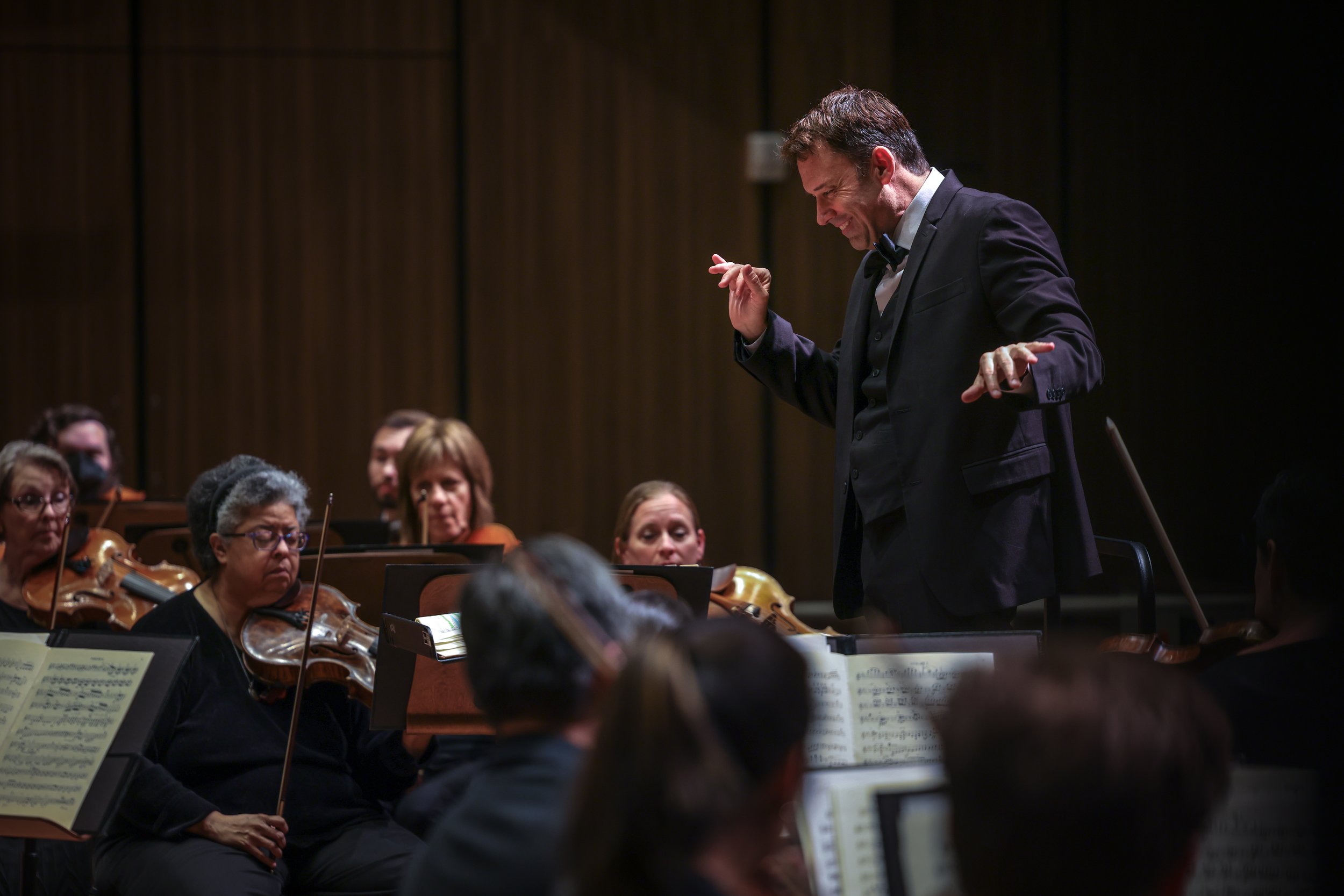
Internationally acclaimed conductor Robert Moody is well known as guest conductor to many of the world’s greatest orchestras, including Chicago Symphony and L.A. Philharmonic, Vienna Chamber Orchestra (Austria), and the major orchestras of Canada, Colombia, Germany, and South Africa.
Moody is currently music director for both Memphis Symphony Orchestra (TN) and Arizona Musicfest, as well as Principal Conductor for Lakeland Opera (FL). Prior to Memphis he was music director for both the Portland Symphony Orchestra (Maine) and Winston-Salem Symphony (NC), and on conducting staffs for Phoenix Symphony, Santa Fe Opera, Brevard Music Center, and the Interschool Orchestras of New York City.
Conducting highlights for this season include return engagements with the three top orchestras in South Africa, Shenzhen Symphony (China) as well as Buffalo Philharmonic, Chattanooga Symphony/Opera, Billings Symphony, Baltimore Chamber Orchestra, and Greensboro Symphony Orchestra. He also leads a gala concert with Arizona Musicfest Festival Orchestra and superstar Renée Fleming in March 2024.
Moody’s work can be heard on multiple commercial recordings, including Stephenson’s “Concerto for Hope” with legendary trumpet player Ryan Anthony and the Memphis Symphony Orchestra.
Maestro Moody holds degrees from Furman University (SC) and the Eastman School of Music (NY). He is a runner, swimmer, history buff, “Jeopardy!” addict, and snow-skier.

-
Hailed as “among the most gifted musicians of his generation” with a “dazzling natural keyboard affinity” who “made quite an impression” by the Washington Post, American pianist/composer/improviser Charlie Albright has been praised for his “jaw-dropping technique and virtuosity meshed with a distinctive musicality” by The New York Times, and his “extravagance that had showmanship but never felt cheap” with his “ease and smoothness that refuses to airbrush the music, but animates it from within” by the Philadelphia Inquirer. Recipient of the prestigious Avery Fisher Career Grantand Gilmore Young Artist Award, Albright won the Ruhr Klavier Festival Young Artist Award presented by Marc-André Hamelin (Germany) and the Young Concert Artists International Auditions. In addition to performing, Albright is sought after as a speaker, masterclass instructor, teacher, and competition judge. His debut commercial recording, Vivace, has sold thousands of copies worldwide and the first two parts of a 3-partSchubert Series of live, all-Schubert recordings was released in 2017 and 2020.Charlie Albright breaks the "classical" rules of music by connecting with audiences like no other. Through his music, speaking, and unique improvisations that bring music to life, he crosses all genres...and makes it fun. Albright regularly appears at major concert halls, festivals, and with artists of all genres worldwide. He is a frequently returning guest artist with such orchestras as the BBC Concert Orchestra (14-concert tour with Maestro Keith Lockhart, chosen as one of the “Best of the BBC 2015”); and the Alabama, American, Baltimore, Bergen (Norway), Boston Pops, Buffalo, California, Chamber Orchestra of Philadelphia, Edmonton (Canada), Des Moines, Fort Smith, Houston, Kymi Sinfonietta (Finland), Lansing, Mobile, National Center for the Performing Arts (Beijing, China), Omaha, Philly Pops, Phoenix, San Francisco, Seattle, Seongnam (Seoul, Korea), Victoria (Canada), and West Michigan Symphony Orchestras. He has performed worldwide, including at the Isaac Stern Auditorium main stage of Carnegie Hall (New York); the Kennedy Center for the Performing Arts (Washington, D.C.); Symphony Hall (Boston); the Salle Cortot (Paris, France); the Arsht Center for the Performing Arts (Miami); the Kumho Art Hall (Seoul, Korea); Seongnam Arts Center(Seoul, Korea); Gum Nanse Music Center (Busan, Korea); the National Center for the Performing Arts (Beijing, China); and Alice Tully Hallat Lincoln Center (New York).In June 2023, Albright performed a Peace Concert with conductor Gum Nanse and the Korean Seongnam Philharmonic at Walt Disney Concert Hall (Los Angeles), commemorating the 70th anniversary of the Korean War’s Armistice Agreement. Albright regularly performs in programs featuring artists from all genres, including vocalist/conductor Bobby McFerrin, violinist Joshua Bell, pianist Emanuel Ax, conductor Gum Nanse, Vocalists Harry Connick Jr., Marc Martel, and Branford Marsalis, and Broadway vocalists Mandy Gonzalez, Scarlett Strallen, and Hugh Panaro. He has performed five times with revered cellist Yo-Yo Ma: at the honorary degree ceremony at Harvard University for Senator Ted Kennedy; at a 10th anniversary remembrance of 9/11; at the 60th anniversary of the Universal Declaration of Human Rights with Nobel Laureate Toni Morrison; at the Aspen Institute’s Citizen Artistry conference in New York; and with the Silk Road Project. Albright’s compositions and improvisations have been likened to “the great Romantic-era composer-pianists ”by Classical Source and have been praised as “thrilling” by the DC Metro Theatre Arts. The Philadelphia Inquirer raved that he “brought the art of classical-music improvisation to a new level. ”A firm believer in education, Albright founded the Charlie Albright Scholarship and Charlie Albright Piano in collaboration with the Centralia College Foundation in his hometown. The Scholarship provides financial aid to music students, and money was raised to purchase and maintain a new 9-foot Steinway Piano for the college’s Corbet Hall. Winner of the Louis Sudler Prize in the Arts and named one of the “15 Most Interesting Seniors, ”Albright was also named Artist-in-Residence for Harvard University’s Leverett House, a position last filled by cellist Yo-Yo Ma. Albright’s numerous awards include First Prize in both Solo and Ensemble categories at the 2006 New York National Piano Competition; First Prize and all other awards offered at the 2006 Eastman International Piano Competition; Third Prize at the 2007 Hilton Head International Piano Competition; Semi-Finalist Award and Best Performance of a Work by Liszt in Stage I at the 2008 Sydney International Piano Competition; and the Vendome Virtuoso Prize and the Elizabeth Leonskaya Special Award at the 2009 Vendome Prize International Piano Competition. Born in Centralia, Washington, Albright began piano lessons at the age of 3. He studied with Nancy Adsit and earned an Associate of Science degree at Centralia College while still in high school. He was the first classical pianist in the Harvard College/New England Conservatory 5-YearAB/MM Joint Program, completing a Bachelor’s Degree as an Economics major and Pre-Med student at Harvard, and a Master of Music Degree in Piano Performance at NEC, having studied with Wha-Kyung Byun. He graduated with the prestigious Artist Diploma (A.D.) from The Juilliard School, having studied with Yoheved Kaplinsky. Albright is an official Steinway Artist. For the latest information, please visit CharlieAlbright.com,Youtube.com/CharlieAlbrightPianist,Facebook.com/CharlieAlbrightPianist, and Instagram (@CharlieAlbrightPianist).
Memphis Symphony Orchestra
Violin I
Barrie Cooper, Concertmaster
The Joy Brown Wiener Chair
Marisa Polesky, Assistant Concertmaster
Diane Zelickman Cohen, Assistant Principal
Wen-Yih Yu, Assistant Principal
Jessica Munson
Daniel Gilbert
Janaina Fernandes*
The Rebecca Webb Wilson Fellow
Carissa Perez
Miguel Lesmes
Ann Pretzer
Martin Palacios
Ana Maria Trujillo
Kate Ryan
Violin II
Erin Kaste, Principal
The Dunbar and Constance Abston Chair
Yennifer Correia, Assistant Principal
Rebeca Rathlef, Assistant Principal
Daniel Parker*
The Judith and Sheldon Korones Memorial Fellow
Julia Mendez Farhi Johnson
Esther Humphries
James Ryan
Sam Spurbeck
Janet Cooper
Jamie Weaver
Gabriela Fogo
Viola
Jennifer Puckett, Principal
The Corinne Falls Murrah Chair
Michelle Pellay-Walker, Assistant Principal
Aaron Tubergen, Assistant Principal
Beth Luscombe
Matthew Finley*
The Joyce McAnulty Blackmon Memorial Fellowship
Michael Brennan
Patrick Monnius
Lexi Pelton
Rossana Cauti
Lenny Schranze
Cello
Iren Zombor, Principal
The Vincent de Frank Chair
Jonathan Kirkscey, Assistant Principal
Hannah Schmidt, Assistant Principal
Mark Wallace
Jeffrey Jurciukonis
Lisandro Acosta*
The Ellen Rolfes Legacy Fellow
Estefan Perez
Elen Wroten
Alisha Rufty
Joseph Miller
Bass
Scott Best, Principal
Chris Butler, Assistant Principal
Sean O’Hara
Andrew Palmer
Jeremy Upton
Tiffany Freeman
Flute
Shantanique Moore, Principal
The Marion Dugdale McClure Chair
Delara Hashemi
Jenny Davis
Kelly Herrmann
Piccolo
Kelly Herrmann
Oboe
Saundra D’Amato, Principal
The Paul and Linnea Bert Chair
Shelly Sublett, Assistant Principal
Lani Kelly, Visiting Oboe
English Horn
Shelly Sublett, Principal
Clarinet
Andre Dyachenko, Principal
The Gayle S. Rose Chair
Rena Feller
Robyn Jones
Nobuko Igarashi
Bass Clarinet
Nobuko Igarashi
Bassoon
Susanna Whitney, Principal
The Carolyn Horrell Heppel Chair
Michael Scott
Christopher Piecuch
Contrabassoon
Christopher Piecuch
Horn
Caroline Kinsey, Principal
The Morrie A. Moss Chair
Jerrick Cendejas, Assistant Principal
Robert Patterson
Jeremiah Frederick
Daniel Vidican
Trumpet
Scott Moore, Principal
The Smith & Nephew Chair
Elizabeth Carter
Sam Oatts
Alex Schuetrumpf
Trombone
Greg Luscombe, Principal
Wes Lebo
Mark Vail
Bass Trombone
Mark Vail
Tuba
Charles Schulz, Principal
The Charles and Sharen Schulz Chair
Timpani
Ed Murray, Principal
Percussion
David Carlisle, Principal
Bill Shaltis, Assistant Principal
Stewart Plumlee
Michael Karcz
Harp
Frances Cobb Kenney, Principal
The Ruth Marie Moore Cobb Chair
Marian Shaffer
Piano/Celeste
Adrienne Park, Principal
The Buzzy Hussey and Hal Brunt Chair
*Circle of Friends Fellow
DONORS
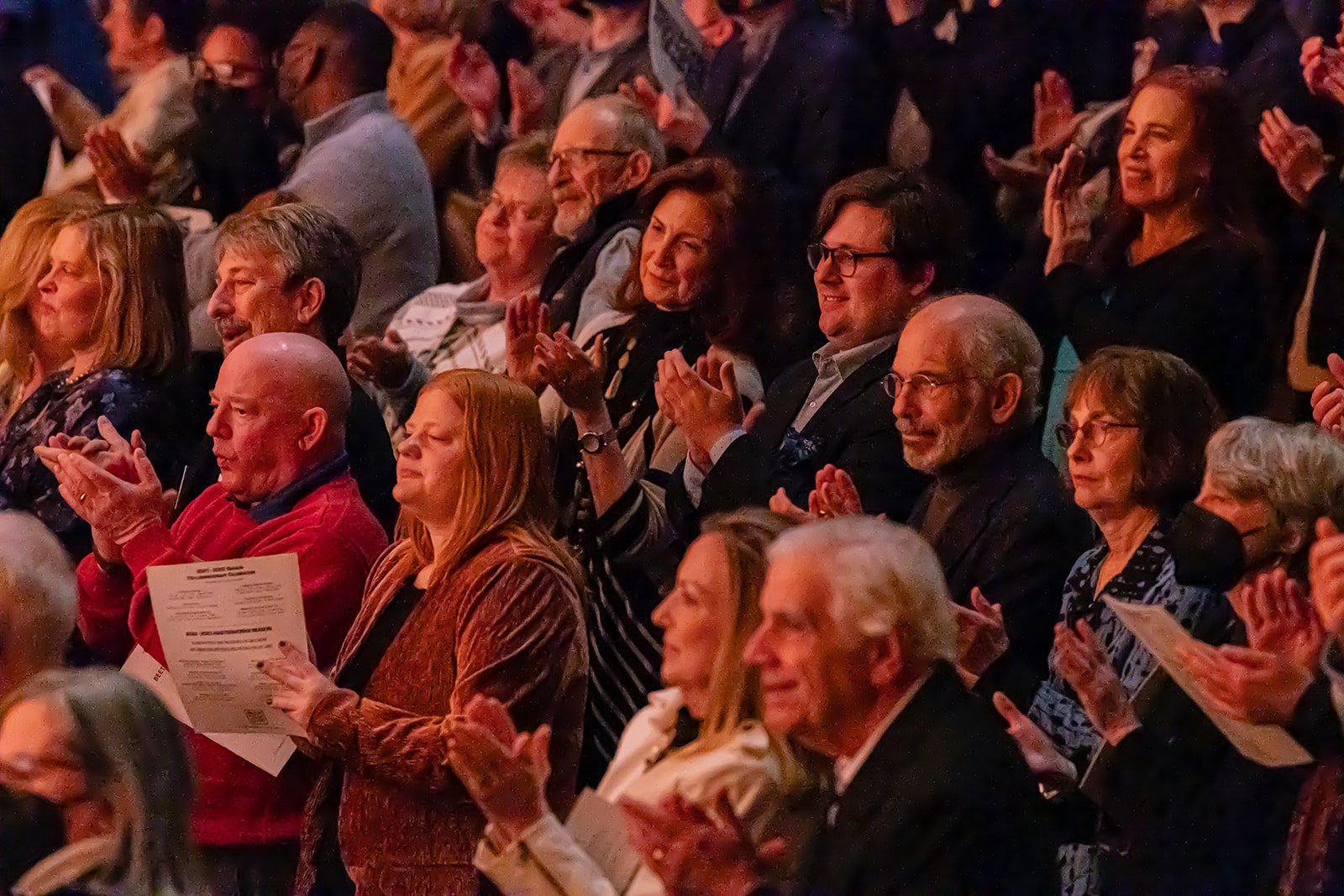
THANK YOU! Individuals, corporations, foundations, ArtsMemphis, the Tennessee Arts Commission, and others make annual contributions to support the Memphis Symphony Orchestra. The following community members have expressed their support for the Memphis Symphony for the 2023 - 2024 Season.
-
ArtsMemphis
Paul and Linnea Bert
City of Memphis
Community Foundation of Greater Memphis
The Estate of Donna Fisher
Carolyn and Scott Heppel
International Paper Foundation
Kevin Roper
Scheidt Family Foundation
Tennessee Arts Commission
Joy Wiener -
Jack Belz
Ron and Anise Belz
Estate of J. Richard and Carole M. Briscoe
Jere Gerard
Suzanne Gronemeyer
Bernice Hussey and C. Hal Brunt
Masanori and Seiko Igarashi
Korones Family Foundation
Orion Federal Credit Union
Ann L. Powell
John and Ashley Remmers
Roadshow BMW, Inc.
Shelby County Government
Linda and Ron Sklar
Candace Steele Flippin
Thomas W. Briggs Foundation
Jack Ward
Rebecca and Spence Wilson -
Peter and Jessica Abell
Bert and Carol Barnett
Alice Rawlins and Phil Burnett
Elizabeth and Charles Carter, Jr.
Maria and Michael Douglass
David and Susan Ellison
Elvis Presley Charitable Foundation
Katherine Buckman-Gibson and J.W. Gibson
Pam and Steve Guinn
Dorothy Kirsch
Edwin Koshland
Robert and Mary Nell Kuhlo
Eva Lang and Scott LeMay
Dinah and Gary Makowsky
Amy and Tony Milam
Linda Milbradt
Henry and Snowden Morgan
Thomas and Sue Nesvick
Nike, Inc.
Trezevant Manor
Trustmark Bank
Henry Turley Company
Nancy Walker -
Stephen Agar
Louise and Will Barden
Henry and Janet Bartosch
Reed Baskin and Alice Nishiwaki
Stanley and Dot Bilsky
Karen Bowyer
Arthur and Michelle Buring
Copland Foundation
Sara Holmes
Lowry and Laura Howell
Donna Jefcoat
Dr. Carol Johnson-Dean
Ellen Klyce
Bruce and Susanne Landau
Ann and Dudley Langston
Al and Janet Lyons
Elizabeth and Jerry Marshall
Elisa and Ramon Marus
Irma W. Merrill
Alan and Zoe Nadel
Tim Nicholson
Robert Patterson and Patricia Gray
Samuel & Anna Robbins
Laretha R. Sargent
Stephen and Deborah Schadt
Jane and Bruce Smedley
Paul Thomas
Deborah Dunklin Tipton Charitable Fund
Otis and Marilane Warr
Barry and Cynthia A. White -
Fran and Peter Addicott
Belinda and Calvin Anderson
Rodney Baber
Joey and Neal Beckford
Christopher and Helen Bird
Betty Blaylock
Robert and Sheryl Bowen
Paul Brezina
Rose Merry Brown
Paul and Suzanne Burgar
Canale Foundation
Carol Lee and Joe Royer
Anne Carriere
Daniel Case
Shelly Cheng
Gloria Cherry
Karen Clawson
Lisa Courtney
Elaine Crown
Carol Cummings
Cynthia Ham
Gay Daughdrill Boyd
Blanche Deaderick
Leila Dodge
Jim Dorman
JT Elliott
William Etnyre
Eyleen Farmer
Farrell Calhoun, Inc.
Jim and Susan Fletcher
Fred and Mary Lawrence Flinn
David and Luann Forell
Susan Frazee
Juan Fuentes
Pamela Gold
Billie and J. Russell Goodloe, Jr.
Devon Gosnell
Jerrold and Martha Graber
Charles and Miriam Handorf
Carolyn Chism Hardy
Galen and Debi Havner
Page Henrion
Marisa and Paul Hess
Nancy Howell
Joanna Hwang
Frank and Jeanne Jemison
David and Lisa Jennings
Edith Kelly-Green
Kevin Danish
Sandra Kincaid
Yoriko Kitai
Barbara Lapides
Lucy and Tom Lee
Barbara McConville
Douglas McNamara
Lisa & Maurice Mendel
Rodgers Menzies
Jeanie Mercer and Breen Bland
Jan and Scott Morrell
Rosalyn Nichols
Cecile and Frederick Nowak
Marianne Parrs
John Pickens
Kenneth Prince
Judy Ringel
Rose Montgomery Johnston Family Foundation
Gayle Rose
Diane Rudner
Beverly and Ken Sakauye
Nick Sarraf
Dale Schaefer
Mary Scheuner
Samuel and Leanne Scull
Eddie & Mary Seratt
Jerry Sharp
Cynthia Spangler and Charles Askew
John and Cristina Speer
Richard and Trish Spore
Mary Stagg
James and Susan Sullivan
Dr. D. Parker Suttle
Joan Terry
Diane Thornton
Catherine Todd
Melissa Todd
Donald Tucker
Lura and Steve Turner
Michael and Andie Uiberall
Susan Van Dyck and James Newcomb
Bill and Carmine Vaughan
Dianna Voyles
Dr. Lee and Mary Linda Wardlaw
Graham and Megan Warr
Betty and Jules Weiss
Benton Wheeler and Aimee M. Christian
Linda Wible
David and Dorothy Work
Mary Wurtzburger
Jocelyn Wurzburg
Susan Yount
Lyn and Gordon Yukon
Dennis Zolper -
David Adair
Adam Shirley
Lou Adams
Susan Adams
Thea Adell
Lyman and Sally Aldrich
Roosevelt and Joann Allen
Allison Arguello
Alyssa Hester
Amro Music Stores
Paula Amrod
Amy Guenrich
Anand Srinivasan
Andrew Fields
Andrew Nichols
Angela Bryant Sykes
Anne Freres
Frank Anthony
Eleanor Appling
Ardelle Walters
Scott and Kim Arnwine
Philip and Carol Aronoff
Anne Ayres
Azizah Young
Matthew Babb
Mary Allie Baldwin
Olivia and Veneta Ball
Cecilia Barnes
Nancy Barnhart
Barry Godwin
Nancy Bass
Charles and Syrena Beall
Jean and Jeffrey Bedwell
Brad and Penelope Behnes
Charles Belenky
Gary and Sheila Bentley
Marie-Stéphane Bernard
Bethany Ross
Betsy Kelly
Gerald and Judith Bettice
Nathan Bicks and Andrea Bienstock
Hal and Peggy Bishop
Matthew Bishop
Jack and Kathleen Blair
Serena Blais
Thomas Bohn
Judith Bookman
Stefan and Anne Borst
Mary Borys
Henry Boyd
James and Martha Boyd
Debbie Branan
Carole Branyan
Brenda Cox
Brian Harrington
Ruby Bright
Harold H. Brown
Stephen Brumfield
Mary Beth and Tom Bryce
Charles and Susan Burnett
Michael and Suzanne Burnett
Stephanie Caldwell|
RaMona Callahan
Candace Dolls
Kathryn Cannon
Colleen Capstick
Carlos Gonzalez
Carole McKellar
Jeanne Carr
Gale Carson
Linda Carter
Casey Canady
Jackie Cash
Catherine Eyrich
Catherine Sullivan
Frank Chalona
Charity Zeiset Williams
Chase Harris
Cheryl Frank
Joan and Patricia Chesney
Ruby Chittenden
Chris Kenny
Chrissy Geibel
Barbara Christensen
Christopher Avis
Christopher New
Chunte Hsu
Jim Clark
Shirlee Clark-Barber
Susan Clement
John Coats
J.B. Cochran
Sheila and Robert Cohen
James and Joy Coleman
Chelsea Conn
Barbara and Leo A Connolly
Contrina Huffman
Frances Cooper
Grace & Gary Copeland
Cora Adams
Jim and Pat Corbitt
Corinda Shelley
Martha Ann Corlew
Courtney Reeves
Rebecca Courtney and Bobby
Rogers
Katherine Cowan
William and Margaret Craddock
Ed and Laura Crawford
Paola Crocker
V. Glenn and Nancy Crosby
Edwin Cunningham
Dabney Raburn
Barbara and Ray Dan
Dana Lynn
Dane Perugini-Cripps
A.J. Daneman
Susan Daniel
Danny Ray
Victor Dansk
Darcus Greene
David O'Brien
David Wade
Leo Davis
Susan Davis
Dean Massey
Maria DeBacco
Deborah Bledsoe
Deborah Harrison
Debra Herr
Declan Bennett
Dee Lofton
Renee DeRossitt
Kathryn Deshpande and Jon Katze
James and Lucy Digmon
Lee Dixon
Elizabeth Domico
Gregory & Esther Donnenworth
Peter Doorley
Dorothy Simien
William and Jane Drummond
Regina Duberstein
Alice and John Dudas
Ralph Duncan
Eileen Hogan
Elizabeth Keough
Elizabeth Umstot
Jeanne Ellett
Hallie Elliot
Julie Ellis
Joy Ellison
John and Laura Engbretson
Eric Fox
Evan Hurst
Marsha Evans
Rebecca Evans
V. Lynn Evans
Jackie Falls
Pat Faudree
Patrick and Griselda Fellmann
Edward and Gloria Felsenthal
Allan and Helen Ferguson
Jose and Mylene Ferrolino
Elaine Fetzer
Carl and Donna Flinn
Lori Franklin
Mary W Freeman
Martha and Noel Frizzel
Gabrielle Summers
Karen Gagnon
Adam Gahn
Elizabeth Garat
Hector Garcia
Kathleen Gardner
Kathryn Gardner
John and Kim Gaskill
Phyllis Gay
Sally Gentry
George Johnson
Germantown Church of Christ
Billie Gholson
Cynthia Gholson
Charles Gilder
Luanne Gillock
Christy Gilmour
Ginny Yeager
Marylon Glass
Richard Glassman and Susan
Lawless-Glassman
Penny and Howard Glatstein
Glinda Rhodes
Gloria White
Henry Goddard
Franklin and Katherine Godoy
Nancy and Sonny Golden
Robert and Kate Gooch
Andrea and Mike Goughnour
Grace-St. Luke's Episcopal
Janet Grant
Shirley Gravenor
Maxine Gray
Katherine Green
Grey White Paws Inc.
Anyu Gu
Lesley Gudehus
Phyllis Guenter
David and Pamela Hallin
Clarence and Harriett Miller Halmon
Claudia and Bill Haltom
Melissa Hamilton
Alan & Kathy Hammond
Sandra Harper
Albert and Nancy Harvey
Cynthia Heard
Niki Hemness
Julie and Kimbrough Henley
Carolyn N Henry
Deborah Hester Harrison
Bob and Martha Hester
Larry Hilbun
Martin and Rosemary Hill
Rosemary Hill
Walter Hoehn
Lewis and Lunida Holland
Honeybird Foundation
Eula and Rob Horrell
Lynne Hostetler
Mary and Larry Houk
Elizabeth and Horace Houston
Julia Howell
Dr. Mary Lin Hudson
Hugh Chisholm
Marilee Hurley
John and Paula Stack-Hurt
Hyde Family Foundation
Nobuko Igarashi
Frank and Susan Inman
Janas Jackson
Laurita Jackson
James and Natalie Jalenak
LR and Peggy Jalenak
Jamie Herren
Janet Dillard
Daisy Jefferson
Jeffrey Land
Jennifer George
Jennifer Pierce
Jennifer Wilczynski
Susan Jennings
Johnny B Tate Jr
Kay and Warren Johnson
Robert Johnson
Stacey Johnson
Jon Briggs
Jon Hawk
Janet Jones
Mott Jones
Teresa Jones
Joseph D'Agostino
Josh Rosa
John and Lynn Joyner
Royce & Sirella Joyner
Judy Weatherly
Nora Kaltakdjian
Karen McKenzie
Kason Irvin
Edward and Lawryn Kasper
Katrica Hayslett
William Keiser
Robert Keith
Lynne Keller
Mary Kelly
Kevin Sublett
Cynthia King
Juliette Kippen
Albert Kirk
William Kratzke
Judy Kriger
Kroger
Lisa Krupicka
Leslie Kuharich
Aurelia Kyles
Shirley Kyles
Debra LaBarreare
Grant LaClave
Lakeisha Williams
Nathaniel Landau
Madeleine Landrum-Noe
Jennifer Lane-Watson
Bob Langston
LaTesha Coleman
Latoya Garcia
Latrice Holmes
James and Jennie Latta
Mary Layton
Karie Leatherman
Katherine Lee
Leighanne Timmerman
Barbara Levingston
Linda Cook Walker
Linda McKnight
Terri E. and Gary Lindquester
Lauriann Lines
Lisa Igoni
Lisi Belz McCarthy
Lester and Roslyn Lit
Deborah and Melvin Litch
Beverly Littlejohn
Karl Loeblein
Thomas Lostritto
Joey Lott
Babbie Lovett
Nathan and Marilyn Lubin
Nathaniel Lunceford
Charlton Lyons
Jennifer Lyons
Evelyn Makowsky
Deidre Malone
Margaret Nations
Maria Petkova
Mark Quest Ajoku
Marlene Remus
Anca Marr
Martha Lyle Ford
Martin Hand
Montgomery and Laura Martin
Mary Day
Mary Lee Hall
Mary Mulroy
Barbara Mashburn
Toni Mason
Emily Matheny
Matt Williams
Bacarra Mauldin
Mauricio Calvo
Dorothy Mayse
Mary Lou McCaa
James McClanahan
Don and Peggy McClure
Marion McClure
Mark and Ashley McClure
Charles and Janie McCrary
Richard and Lori McFalls
Don and Sunshine McKinnon
John and Michelle McKissack
Alexander and Margaret McLean
Anita and Don McLean
Gretchen and Kojo McLennon
Bill McManus
Norann McManus
Major and Linda McNeil
Jean and Michael McSwain
M. Catherine Meadows
Dan and Amy Meadows
Logan and Simone Meeks
Diane Meess
Melissa Eudaly
Memphis Symphony Chorus
Lynn Menendez
Silvia Alicia Merediz
James Mertzlufft
Thomas Miles
Mindy Huddleston
Hubert and Elizabeth Minton
Mio Donley
Vance Montgomery
Kent and Laurie Monypeny
Warren and Ruth Morrison
William and Jane Morse
Elbert & Tamara Mosby
R. J. and Susan Moskop
Nancy Mobley
Robert and Sara Nardo
Monika L Natarajan
Nathan Prosser
Nathaniel Warren
Neely James
Denise Nelson
Thomas and Monika Nenon
A. Newberry
Sindhia Nichols
Henry Nicholson
Nicole Jalandoni
Nikki Rhoda
William and Barbara Nixon
Deborah Northcross
Ken Nuckolls
John and Barbara Ogles
Leo Old
Eileen and Michael Olewinski
Oneka Richardson
Ron and Stephanie Osher
Shelley Ost
Max B. Ostner, Jr.
Outhone Sonesana
Cindy Pace
Paige Dumas
John Palmer
Marvin Palmer
Pam Golding
Elena and Helena Parfenova
Mr. and Mrs. Parker
Patrice Curry
Patrick Drummond
Rushton Patterson
Trinette Patterson
Paula Joyner
Amanda Paule
Eugene Pearlman
Atanas and Katyusha Pehlivanov
Jim Pentecost
Alan and Sally Perry
Peter Wiley
Valdas Petrouskas
Phil Goossens
Virginia Pilcher
G. Dan and Chloee Poag
Albert Pope
Porshure Richardson
Reginald and Sonya Porter
Peter Pranica
Howard and Margaret Pritchard
Rosemary Purdy
Jessica Reed
Kerry Regen
Reginald Richard
Ulrike Reiss
Joanne Rhodes
Richard Sutch
Curtis and Patricia Ringold
Rita Smith
Rev. Phoebe A. Roaf
Kari Robbins
Beverly Robertson
Carol Robertson
Betty Robinson
Jessica & James A Robinson
Ellen Rolfes
Ronna Martin
Monica Rose
Meryl Rosen
Victoria Ross
Ruben Caballero Pineda
Fedoria Rugless
Russell Savory
Ruthie Pride
Ryan Quinlivan
Diane Sachs
Sally Helms
Tracey and Peter Sanders
Sanjar Umarov
Aimee Santucci and John Jolly
Sara Alvarez
Savanna Eggenberger
Sayra Medina
Beth and Sandy Schaeffer
Chrisann Schiro-Geist
Karl and Gail Schledwitz
Jean Schmidt
Jutta Schneider
Connie and Eric Scott
Valerie Scott
Art and Janet Seessel
Elizabeth Senhausen
Patricia Seubert
Douglas Seymour
Frank and Marian Shaffer
Shannon Bryant
Fran and Phil Shannon
Anne Shaw
Lucy Shaw
Karen Shea
Paul Shifflet
Shirley Turner
William Short
Susan & Matt Shorter
Martina Sigal
Liz and Rouben Simonian
Elizabeth and David Simpson
Gregory Skinner
Jerald and Louise Sklar
Dr. William Skoog
Harriet Skupin
Stephen & Chelsea B Slabaugh
Peter Slavish
John Sligh
Corey Smith
Joel Smith
Pamela K. Smith
Sonya Walton
Sophia Woods
Katharine Sorenson
David and Jackie Spear
Diane Spears
Raymond and Gayle Spence
Michael and Aimee Spikes
Susan Springfield
Stacey Bowers
Barbara Stafford
Tracey Stallings
Rebecca Stanfield
Lindsey Stanfill
Dianne Stanford
Terry Starr
Julian Steelmen
Jeremiah Steinbrink
Stephanie Johnson
Edith Stern
John Stewart
Lauran Stimac
John and Anne Stokes
Donna Stroup
Karen Stuart
David and Mary Anne K. Sullivan
Suzanne Drewry
Tabitha Arrington
Owen and Margaret Tabor
Tabrina Davis
Taylor Wilmott
Terri Williams
Robin Thoda
Sally Thomason
Kimberly Thompson
Sarah Tillman
Timothy Todd
David Tipton
Mark Tittle
Tom Ebers
Tom Timimak
Benjamin Trainor
Tuesday Study Club
Michael Ulm
Jennilynn Utkov
Jo Vail
Alan Valentine
Bill and Peggy Veeser
Carmel Verrier and Walter Heger
Vicki Carayiannis
Virginia Terrell
Charles Walker
Russell Walker
Philip Walkley
Julie Wallace
Erin Walter
Paula Walter
Gavin Ward
Kathleen and Tim Waters
Samantha Watts
Alonzo and Suzane Weaver
Gina and Jeffrey Webb
Debra West
Benny and Gayle Westmoreland
A C and Ruby Wharton
Lain Whitaker
Willard & Catherine Whitaker
Justin White
Alvin and Myra Whitney
Reggie Whitney
Ogden Whyte
Marilyn Wiener
William Koenig
William Page
William Scott
William Ufferman
Suzanne Williamson
Linda Willis
Willow Blythe
Wilson Hubbard
Teresa Wilson
Dean and Lauran Wingo
Dorothy Work
Yavette Gray
Linda Yoakum
Jason and Susan Young
David and Nelie Zanca
Carolyn & Robert Meza
Jennifer Diprizio & Patrick Krolik
Mary Van Dyke
Ann Marie Person
Mary Stuart David
Sharon Devine Harris
Victoria N Crozier
Angel David Martinez Nieto
This list recognizes philanthropic contributors to the MSO made between July 1, 2023 - August 28, 2024 . While compiling this list every effort has been made to reflect the accuracy of our donors. If your name has been misspelled, omitted, or misrepresented please contact us at 901-537-2500 and will correct our records. We appreciate your generosity and understanding.