TCHAIKOVSKY’S 4TH
Saturday, September 19, 2026 · 7:30 pm
Cannon Center for Performing Arts
Sunday, September 20, 2026 · 2:30 pm
Scheidt Family Performing Arts Center
Robert Moody, conductor
Bryan Cheng, cello
ROBERT PATTERSON
(b. 1957)
“Traffic at Tom Lee Park” from Postcards from River City
MASON BATES
(b. 1977)
Cello Concerto
Bryan Cheng, cello
INTERMISSION
PIOTR ILYICH TCHAIKOVSKY
(1840-1893)
Symphony No. 4 in F minor, op. 36
I. Andante Sostenuto
II. Andantino in modo di canzona
III. Scherzo: Pizzicaro ostinato
IV. Finale: Allegro con fuoco
Program Notes
-
Piotr Ilyich Tchaikovsky: Concerto for Violin and Orchestra in D Major, Opus 35
First Performance: Vienna, December 1881, Hans Richter, conductor, Adolph Brodsky, soloist
Piotr Ilyich Tchaikovsky’s iconic Violin Concerto, whilst receiving mixed reviews early on, has become a favourite of audience members and performers alike, and these days, is always awaited with eager anticipation. He began composing the work in Clarens, Switzerland in 1878 (whilst recovering from a bout of depression brought on by the fallout from his rather unfortunate marriage), and it received its premiere performance in Vienna three years later. It is scored for a standard 19th century orchestra, featuring woodwinds in pairs, four horns, two trumpets, timpani, and strings. The First Movement begins with an introduction played by the orchestra—whose theme is never heard again—and continues in a fairly traditional sonata form. The cadenza is placed between the development and the recapitulation, rather than between the recap and the coda, as was typical of most concerti from the Classical era. Movement Two is in a sweetly lyrical ABA form, and is followed by Movement Three, a boisterous sonata form with rondo elements, with no break in the music. The piece has been subjected to what many (myself included) consider to be unnecessary cuts off and on over its performance history, apparently to remove redundant material and/or to shorten its length. Happily, in the 21st century, it is normally presented as originally penned by the composer.Jean Sibelius (1865-1957): Symphony No. 2 in D Major, Opus 43
First Performance: Helsinki Philharmonic Society, March 1902, Jean Sibelius, conductor
Personal Note: The Second Symphony of Jean Sibelius has long been a favorite of mine. My dad gave me my first recording of the work during my early teens, on an eight-track tape that I still have. I had known the piece quite well for a number of years before I ever got to perform it, and it goes without saying what a happy occasion getting to finally play it turned out to be!!Sibelius began writing this symphony in 1901 and finished it a year later, with the first performance taking place in Helsinki that spring. It is scored for a large orchestra that includes woodwinds in pairs, four horns, triple brass plus tuba, timpani, and strings. The work is in four movements, with movements three and four played without a break in the music. There has been some controversy off and on about whether or not the symphony is programmatic in nature (Sibelius himself categorically denied any such intent); be that as it may, the work is a masterpiece of fiery brilliance. Many moods are captured here: The effervescence and drama of the first movement; a second movement that by turns creates a stark landscape in contrast with intense passion; a scherzo that gives the strings a serious workout along with the beautifully lyrical melody led by the oboe in the trio; and the triumphant fourth movement, complete with trumpet fanfares.
Note of interest: The Minnesota Orchestra's renowned conductor, Osmo Vanska, also from Finland, had this to say about the work (in 1998): "The Second Symphony is connected with our nation's fight for independence, but it is also about the struggle, crisis and turning-point in the life of an individual. This is what makes it so touching."
On Stage
-
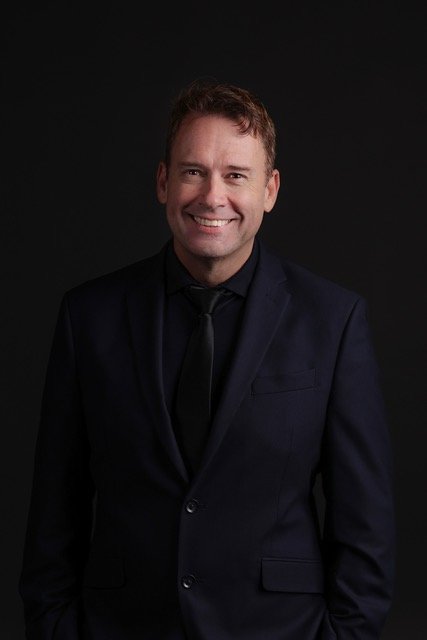
Internationally acclaimed conductor Robert Moody is now celebrating his 10th season as Music Director of The Memphis Symphony Orchestra (Tennessee), 20th season as Music Director of Arizona Musicfest, and his 2nd season as Music Director of the Baltimore Chamber Orchestra.
Under his artistic leadership, AZ Musicfest has become the premiere Winter Music Festival Orchestra in North America, boasting a roster of players from the world’s greatest orchestras. The Memphis Symphony has enjoyed exponential growth in programming, recording, and new commissions. Baltimore Chamber Orchestra boasts top players from the top orchestras in the Baltimore/Washington area and presents innovative and “out of the box” live orchestral programming at world class levels in the Mid-Atlantic.
Prior positions have included music director for both the Portland Symphony (Maine) and the Winston-Salem Symphony (North Carolina), and Principal Conductor for Lakeland Opera (Florida). Earlier in his career, he held conducting positions with the Phoenix Symphony, Evansville Philharmonic, Santa Fe Opera, Brevard Music Center, Interschool Orchestras of New York City, and apprenticed at Landestheater Opera in Linz, Austria.
Guest conducting this season includes debuts with Cincinnati Symphony, Hong Kong Philharmonic, Madison Symphony Orchestra, Philadelphia Orchestra, San Francisco Symphony, Tallahassee Symphony, and Winnipeg Symphony. He also will return to Lakeland Symphony, and lead concerts with the Royal Conservatory Orchestra in Toronto, Canada, and the IberAcademy Orchestra in Medellin, Colombia.
Maestro Moody has conducted many of the world's major orchestras and opera companies, including Chicago Symphony, Los Angeles Philharmonic, Toronto Symphony, Dallas and Houston Symphonies, Kansas-City Symphony, Minnesota Orchestra, Washington National Opera, Aachen and Baden Baden Symphony Orchestras in Germany, Wushi and Shenzhen Orchestras (China),Orquesta Filarmonica de Bogotá (Colombia), the Vienna Chamber Orchestra (Austria), Tampere Philharmonic (Finland) and Banatul Orchestra (Romania). He is also a frequent guest conductor in South Africa, returning often for concerts with the three major orchestras there – the Cape Town, Johannesburg, and KZN (Durban) Philharmonics.
A frequent collaborator with opera superstar Renée Fleming, he will conduct her on multiple occasions in the upcoming season in China, Canada, and the United States. In 2024 he performed the full orchestra world premiere of Voices of Nature: The Anthropocene, a song cycle created by Ms. Fleming in collaboration with National Geographic.
Moody’s work can be found on several commercial recordings, including the Canadian Brass albums Bach and Legends, R. Carlos Nokai’s Fourth World, and with Memphis Symphony Orchestra and trumpet legend Ryan Anthony on Re:Mission Rubato.
Robert is also a close friend and collaborator with Grammy winning composer Mason Bates. Their friendship spans over 30 years, and Moody was the first conductor to commission a full orchestral work from Bates. Robert also commissioned several major works of Mason’s, including Rusty Air in Carolina, and the much lauded Desert Transport. Last season he conducted the world premiere of Bate’s triple concerto Silicon Hymnal with the Grammy winning ensemble Time For Three.
A South Carolina native, Moody holds degrees from Furman University and the Eastman School of Music, where he earned his conducting degree with Donald Neuen. Additional studies included an undergraduate study abroad in Vienna, Austria, and a summer of study with Otto Werner Mueller at Le Domaine Forget in Quebec. He is a Rotarian, and has served on the boards of AIDs Care Services, Winston-Salem YMCA, WDAV Classical Radio, and the Charlotte Master Chorale.
Moody celebrates the life and work of organist/conductor Jimmy Jones, his spouse of 18 years who passed away unexpectedly early in 2024. He now dedicates all his musical endeavors to Jimmy.
Moody lives in Memphis with their two dogs; he is an avid runner, swimmer, history buff, “Jeopardy!” addict, and snow-skier.
-
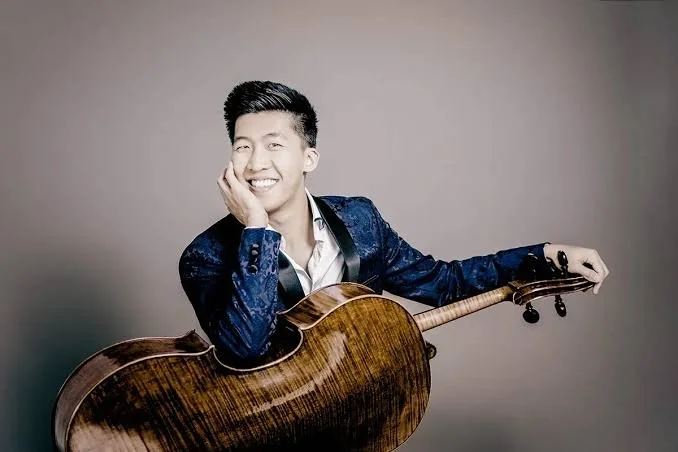
Canadian-born, Berlin-based cellist Bryan Cheng is one of the most compelling artists of his generation, praised for the "incredible intensity and urgency" of his playing (Tagesspiegel) and its "otherworldly intimacy" (Frankfurter Allgemeine Zeitung). He is the only prizewinner of both the Queen Elisabeth and Geneva International Music Competitions in 40 years.
In the 2025/26 season, Bryan debuted with the Chamber Orchestra of Europe, NDR Radiophilharmonie Hannover, Musikkollegium Winterthur, Nürnberger Symphoniker, Sinfonieorchester Wuppertal, Baltimore Chamber Orchestra, and Orchestre symphonique de Québec. He also returns to the Deutsches Symphonie-Orchester Berlin for their celebrated New Year's concerts, and performs with the National Arts Centre Orchestra Ottawa, Janaček Philharmonic Ostrava, and Winnipeg Symphony, among others.
In chamber music, Bryan is the 2025/26 Musician-in-Residence of Halifax's Cecilia Concerts and makes his Carnegie Hall Zankel debut with Kirill Gerstein and colleagues of the Kronberg Academy. He performs widely across North America, Europe, Colombia, and South Africa with his two duos, Cheng² Duo and CelloFellos.
Bryan was the first cellist awarded the Prix Yves Paternot at the Verbier Festival Academy and is the 2023 recipient of the Canada Council for the Arts' Virginia Parker Prize. He has released a trilogy of acclaimed albums on audite, and his 2023 album Portrait was nominated for two JUNO awards.
A graduate of the Universität der Künste Berlin and current student at Germany's Kronberg Academy, Bryan plays the 1696 Bonjour Stradivari cello, on loan from the Canada Council Musical Instrument Bank.
To learn more, visit BryanCheng.com.
Memphis Symphony Orchestra
-
Barrie Cooper, Concertmaster
The Joy Brown Wiener Chair
Marisa Polesky, Assistant Concertmaster
Diane Cohen, Assistant Principal
Wen-Yih Yu, Assistant Principal
Long Long Kang
Priscilla Tsai
Jordan Musgrave
Daniel Gilbert
Carissa Perez
Michael Klyce -
Erin Kaste, Principal
The Dunbar and Constance Abston Chair
Lenore McIntyre, Assistant Principal
Yennifer Correia, Assistant Principal
Ann Pretzer
Miguel Lesmes
Armee Hong
Martin Palacios
Jamie Weaver
Ana Maria Trujillo -
Jennifer Puckett, Principal
The Corinne Falls Murrah Chair
Michelle Pellay-Walker, Assistant Principal
Aaron Tubergen, Assistant Principal
Beth Luscombe
Michael Brennan
Elizabeth Boardman
Rosanna Cauti
Lenny Schranze
Matthew Finley -
Iren Zombor, Principal
The Vincent de Frank Chair
Jonathan Kirkscey, Assistant Principal
Hannah Schmidt, Assistant Principal
Jeff Jurciukonis
Mark Wallace
Estefan Perez
Christine Sears
Elen Wroten
Alisha Rufty -
Scott Best, Principal
Chris Butler, Assistant Principal
Sean O’Hara
Andrew Palmer
Garrett Kirk
Tiffany Freeman -
Shantanique Moore, Principal
The Marion Dugdale McClure Chair
Delara Hashemi
Kelly Hermann -
Lani Smith, Principal
The Paul and Linnea Bert Chair
Saundra D’Amato, Assistant Principal -
Shelly Sublett, Principal
-
Andre Dyachenko, Principal
The Gayle S. Rose Chair
Rena Feller -
Nobuko Igarashi
-
Michael Shults
-
Susanna Whitney, Principal
The Carolyn Horrell Heppel Chair
Jamael Smith -
Christopher Piecuch
-
Caroline Kinsey, Principal
The Morrie A. Moss Chair
Brittany Cooper D’Orsay
Robert Patterson
Jeremiah Frederick
Dan Vidican -
Scott Moore, Principal
The Smith & Nephew Chair
Elizabeth Carter
Alex Schuetrumpf -
Greg Luscombe, Principal
Mark Souedi
Mark Vail -
Charles Schulz, Principal
The Charles and Sharen Schulz Chair -
Ed Murray, Principal
-
David Carlisle, Principal
Bill Shaltis, Assistant Principal
Stewart Plumlee -
Frances Cobb Kenney, Principal
The Ruth Marie Moore Cobb Chair -
Adrienne Park, Principal
The Buzzy Hussey and Hal Brunt Chair
Legacy gifts help ensure that the Memphis Symphony Orchestra continues to inspire and enrich our community for generations to come. This weekend, we remember our dear friend, Mr. Carey Stanley Jr.